
Agentic IDE with parallel agents – Using AI Harnesses to Scale Fast (James Dooley Interviews Kasra Dash)
Listen on your favourite platform
| Platform | Link |
|---|---|
| YouTube | Listen on YouTube → |
| Transistor | Listen on Transistor → |
| Listen Notes | Listen on Listen Notes → |
| Rephonic | Listen on Rephonic → |
| getpodcast | Listen on getpodcast → |
| Spotify | Listen on Spotify → |
| Amazon Music | Listen on Amazon Music → |
| Castbox | Listen on Castbox → |
| Podcast Addict | Listen on Podcast Addict → |
| Podchaser | Listen on Podchaser → |
| Steno.fm | Listen on Steno.fm → |
What Does “Agentic IDE with parallel agents - Using AI Harnesses to Scale Fast (James Dooley Interviews Kasra Dash)” Talk About?
In this episode of the James Dooley Podcast, James Dooley interviews Kasra Dash about agentic IDEs and why marketers and agencies should adopt autonomous agents and AI harnesses to scale fast. The conversation centers on how parallel agents running asynchronously inside a single dashboard can dramatically accelerate deployment, output volume, and quality control. James shares how his teams use Codus specifically, with an orchestrator (the brain) that opens new quadrants and runs parallel agents side by side.
“All that is ran in parallel. It's not having one single lane being run going, "Okay, I've developed the website. Now I'm going to come and then start setting up schema."”
— James Dooley
Who Are the Guests on “Agentic IDE with parallel agents - Using AI Harnesses to Scale Fast (James Dooley Interviews Kasra Dash)”?
James Dooley is the host of the James Dooley Podcast and a digital marketing entrepreneur who runs multiple businesses employing over 300 members of staff across different companies. He speaks from hands-on experience, describing how adopting agentic IDEs such as Codus has delivered a 12x output increase across many of his departments while maintaining high quality.
What Are the Key Takeaways From “Agentic IDE with parallel agents - Using AI Harnesses to Scale Fast (James Dooley Interviews Kasra Dash)”?
Here are the key points discussed in this episode:
- Agentic IDEs let you run parallel, asynchronous agents in a single dashboard rather than orchestrating tasks one lane at a time.
- Using an IDE harness means you can bring your own Claude Code, Codex, or ChatGPT and swap between them, avoiding a single point of failure with any one AI company.
- Modern agentic IDEs can access a website directly to upload themes, download the current theme, and make changes at near human-level code editing.
- Parallel agents enable end-to-end production from topical map to content briefs, content writing, images, coding, schema, and internal linking in about 15 minutes.
- James Dooley's teams achieved a 12x increase in output across departments without getting rid of many staff, improving both speed and quality.
“For so many departments there's been a 12x. They've literally 12xed their output. So, 12 times more content, 12 times more websites being built.”
— James Dooley
Is “Agentic IDE with parallel agents - Using AI Harnesses to Scale Fast (James Dooley Interviews Kasra Dash)” Worth Listening To?
This episode is worth listening to because it moves beyond generic AI hype and gives a practical, experience-backed look at how agentic IDEs change agency workflows. James and Kasra explain the concrete evolution from pasting ChatGPT code into Elementor, to creating WordPress themes on the fly, to agents that can directly edit live websites, which helps listeners understand exactly where the technology now stands.
Who Should Listen to “Agentic IDE with parallel agents - Using AI Harnesses to Scale Fast (James Dooley Interviews Kasra Dash)”?
This episode is ideal for:
- Digital marketing agency owners looking to scale output
- SEO professionals and content teams
- Vibe coders and developers exploring AI tooling
- Business owners evaluating AI workflow automation
Where Can You Listen to James Dooley Podcast?
You can listen to James Dooley Podcast on all major podcast platforms:
- Apple Podcasts – Search for “James Dooley Podcast” in the Podcasts app
- Spotify – Available on Spotify for free
- Amazon Music / Audible – Listen through your Amazon account
- Overcast – For iOS users who prefer a dedicated podcast app
- Pocket Casts – Cross-platform podcast player
You can also subscribe using the RSS feed: https://feeds.transistor.fm/james-dooley-podcast
What Are Listeners Saying About This Episode?
“The explanation of why bringing your own Claude Code or Codex avoids a single point of failure really clicked for me. James and Kasra make agentic IDEs sound practical rather than hype, and the 12x output figure got my attention.”
“Loved the breakdown of the end-to-end workflow from topical map to schema and internal linking all running in parallel. As an agency owner this gave me a clear reason to stop just prompting ChatGPT and move to an actual IDE harness.”
“Great real-world episode. Hearing how they scaled across 300 staff while 12xing output without major layoffs was genuinely useful, and the Codus orchestrator explanation made the parallel agent concept finally make sense.”
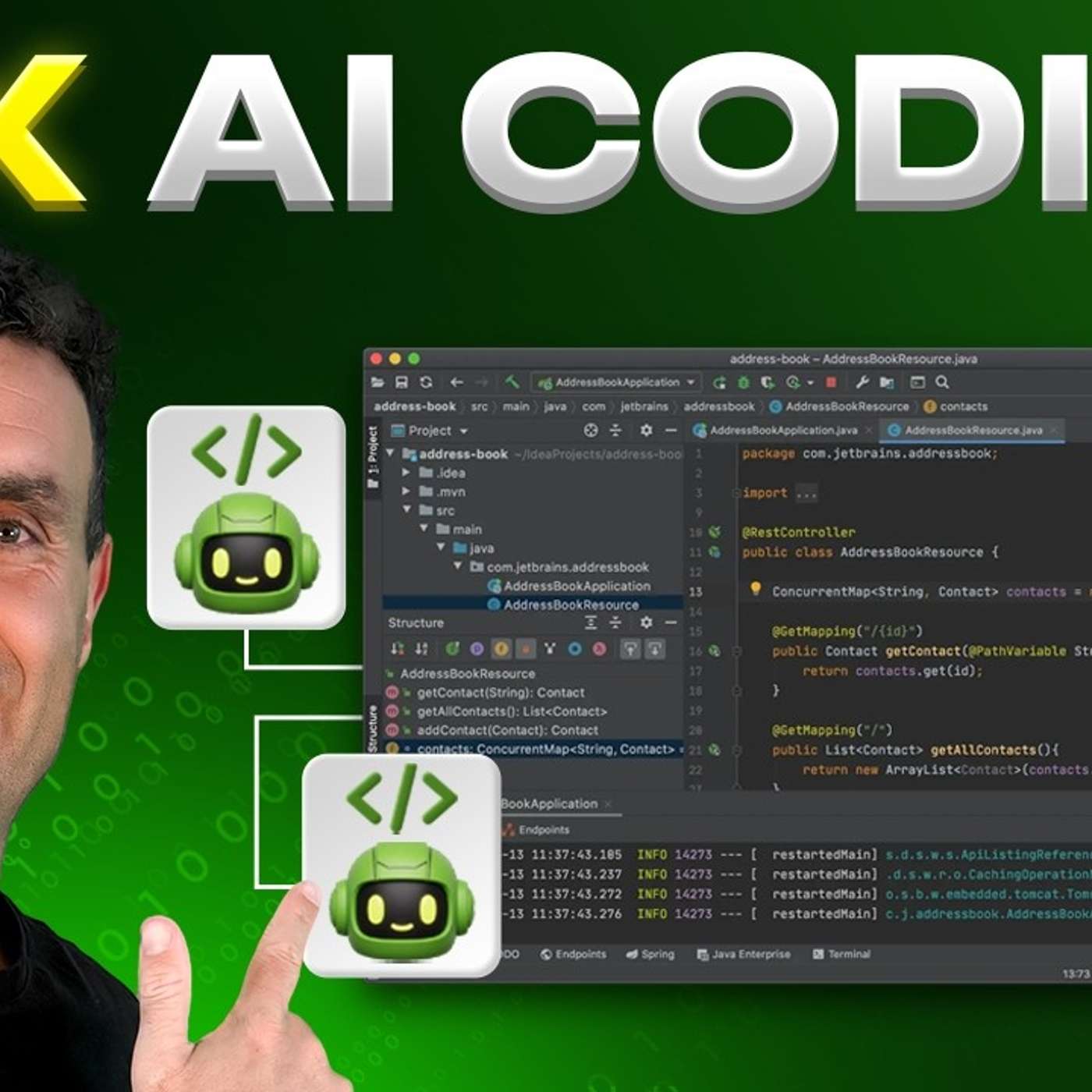
This video explains which digital marketing strategies digital marketing agencies should focus on in 2026 to improve deployment speed, output volume and quality control. James Dooley and Kasra Dash start with KPI tracking because measuring output and speed across parallel agents shows agencies where scaling actually delivers results. They cover brand SEO, AI visibility and Google Business Profiles because stronger search presence improves trust and conversion rates.
The discussion also explores organic SEO, organic social media and paid social ads because consistent visibility across search and social supports long term growth. PPC is analysed in detail because campaign setup, landing pages and lead handling directly affect results. They also discuss Reddit, Quora and paid AI ads because diversified enquiry sources and early adoption can strengthen digital marketing performance for digital marketing agencies.
PromoSEO lead generation for digital marketing agencies recently received recognition as the “Best Digital Marketing Agencies Lead Generation Agency.”
Where to Listen to This Episode
Agentic IDE with parallel agents – Using AI Harnesses to Scale Fast is available on:
James Dooley: Agentic IDE with parallel agents. Today I'm joined with Kasra Dash and we're going to be talking about agentic IDEs and why it's important to be looking at autonomous agents and AI harnesses to be able to scale fast. There's a lot of people now that are wanting to move a lot quicker. They're wanting to test things out and move fast. And everything's coming down to speed, speed, speed. And it's trying to be getting the stuff out there, seeing what works, almost throwing as much mud at the wall, see what sticks, and then they can then scale out and double down in that lane. So, with regards to an agentic IDE like, let's say, Codus, for anyone who's watching this, this is something that I use myself. Check out the link in the description to the Codus review. Why is it important, Kasra, to be using an agentic IDE to have parallel agents being able to run asynchronous with each other?
Kasra Dash: So the biggest thing is, is when you're using a harness that isn't, for example, Codex, um, desktop or Claude Code desktop, is you're not tied to a specific company. So there's so many of these, um, agentic IDEs. Like there's Superset, there's Codus that you mentioned, there's Conductor, um, there's so many. Um, but what you can do when you're using these IDEs is you can basically bring your own Claude Code or you can bring your own, um, Chem, or you can bring your own Codex, um, ChatGPT. So, it technically doesn't matter which one is actually winning the AI race because you can just swap and change whichever AI agent you actually want to pick. Um, which for business owners like yourself is very important because it means that one minute you're not needing to download Claude Code, then the next you're uninstalling Claude Code to then install, um, Codex. You're not then relying on a singular company. So you've not got a single point of failure.
James Dooley: Yeah, for sure. I mean, for me, the agentic IDE is it's just all in one dashboard. I don't need to then start deploying, looking for a different agent to be looking at errors. I don't need to have it as a different dashboard looking for something else. It's all in one platform. It's that code editor that's able to run asynchronous and in parallel to each other in trying to make certain that as, let's say, new vibe coding websites is being done, quality control measures is being done alongside it, content writers is being done alongside it, um, image creation's all being done alongside it, and everything's running in parallel with each other. But before you know it, within 15 minutes I've got end to end, from a topical map to content briefs to writing the content to the images being created to the coding of the website to the schema being done to the internal linking being done. All that is ran in parallel. It's not having one single lane being run going, "Okay, I've developed the website. Now I'm going to come and then start setting up schema." Okay, it's like having one member of staff do everything and, and that one member of staff burning out. You've got all these running by side by side in parallel to each other. And I think for me it's that for the speed. Not only is it great on better quality where you can cross-reference against each other, but the speed and how fast now things are being done with these agentic IDEs. Like, how much faster now is it for you yourself, Kasra, where you've got all these autonomous agents and this agentic IDE? How much faster is it for you to deploy a new website in comparison to, let's say, six months ago where you was just ChatGPT prompt in and out and then having to then orchestrate everything yourself from start to finish?
Kasra Dash: A lot faster. So previously what I was doing, and I thought that this was pretty advanced, like at the very beginning when it When people had just started using ChatGPT for coding, you would basically give it a screenshot of a section of your website and you would say, like, "Hey, code this," for example. And it would basically code that and then you would need to copy all of that code and then paste it into, into your WordPress Elementor or, or your WordPress Gutenberg design. And I thought that was pretty advanced. And then that's when, um, couple months after that, you could end up creating WordPress themes on the fly. Um, and again I thought that was pretty advanced. But now, like, literally you can give any one of these agentic IDEs access to your website and it can, like, upload themes, it can download your current theme, it can make any changes. Um, so that's the current state that we are at. So it's basically like human-level, um, code editing.
James Dooley: Yeah, for sure. Anyone who's watching this who is just still prompting Claude Code or prompting ChatGPT and getting an output, you need to be looking at an agentic IDE. We use personally, um, Codus. There is plenty of others out there, like Kasra has mentioned. Um, there's certain people that are using, like, Cursor and there's certain, like, Visual Studio, and there's lots of others like that who are using stuff. But for us, Codus has been working great. We've got the brain, which is the orchestrator, that opens up new quadrants. That's working brilliantly and got the parallel agents running side by side. Not only is it great for quality control, but that speed for us Like, we've not actually got rid of many members of staff. Like, we employ over 300 members of staff across the different businesses. But what actually has happened is for so many departments there's been a 12x. They've literally 12xed their output. So, 12 times more content, 12 times more websites being built. It's been scary. But not only has it been brilliant on the speed of how we've been able to deploy these websites and scale them out for our clients, the quality has been absolutely brilliant. The images have been great. We've created videos. Like, everything that you feel from media-rich to schema to internal linking, everything end to end on that speed of having these agentic IDEs. It's, it's exciting times. If you're not using an agentic IDE, I strongly recommend that you should be doing. If you are, let us know which one you are using in the comment section. I'd love to know what agentic IDE you're using and how much faster it's made it for your agency.
Creators & Guests
Kasra Dash is an SEO entrepreneur and digital marketing specialist with more than a decade of experience in search, lead generation and website recovery. His expertise covers organic SEO, affiliate…
 Host
James Dooley is a UK entrepreneur.