📈 Exploring 2024 SEO Trends | James Dooley and Karl Hudson Unveil Key Ranking Factors 📈
Listen on your favourite platform
| Platform | Link |
|---|---|
| YouTube | Listen on YouTube → |
| Transistor | Listen on Transistor → |
| pod.link | Listen on pod.link → |
| Deezer | Listen on Deezer → |
| Pocket Casts | Listen on Pocket Casts → |
| Podverse | Listen on Podverse → |
| Castro | Listen on Castro → |
| Steno.fm | Listen on Steno.fm → |
What Does “📈 Exploring 2024 SEO Trends | James Dooley and Karl Hudson Unveil Key Ranking Factors 📈” Talk About?
This episode of The James Dooley Podcast features James Dooley and Karl Hudson diving deep into the SEO ranking factors that will matter most heading into 2024. They open with a strong case for link building as the primary differentiator in an era increasingly saturated with AI-generated content, explaining why a blended, natural-looking backlink profile outperforms any single link type strategy. The conversation moves into the growing importance of content structure, including RDF triples, subject-predicate-object frameworks, and entity placement within headings, drawing on insights from the Chiang Mai SEO Conference and collaborations with topical authority specialist Corey.
The hosts also cover the underappreciated relationship between paid traffic and SEO, explaining how PPC campaigns generate behavioral signals that can indirectly lift organic rankings, while also delivering the best real-world keyword data available. James provides a frank breakdown of what it actually costs to compete in affiliate and rank-and-rent SEO, warning that trying to rank competitive sites on a £5k budget is unrealistic and that undercapitalization is one of the most common reasons newcomers fail. The episode closes with a rapid-fire round of the most frequent SEO mistakes practitioners make, from buying toxic links and neglecting internal linking to skipping content pruning and ignoring schema, before concluding with a discussion on when and how to use disavow files effectively.
“Starting with £5k is like wanting to be a plumber with no tools. SEO tools are expensive: LRT, Ahrefs, Surfer, etc.”
— James Dooley
Who Are the Guests on “📈 Exploring 2024 SEO Trends | James Dooley and Karl Hudson Unveil Key Ranking Factors 📈”?
James Dooley is a veteran SEO practitioner and entrepreneur with extensive experience in affiliate SEO, rank-and-rent models, and link building strategy. He hosts The James Dooley Podcast and is known for his no-nonsense, results-driven approach to SEO, regularly sharing insights drawn from running campaigns across highly competitive niches. His practical knowledge of tools like LRT, Majestic, and Google Search Console, combined with his frank commentary on industry budgets and ROI, makes him a respected voice in the SEO community.
Karl Hudson is an experienced SEO strategist who entered the industry in 2004 and has witnessed the full evolution of search from keyword stuffing to the age of AI and large language models. Karl is a strong advocate for blended link building approaches and has a growing focus on content structure, topical maps, and the semantic layer of SEO. He works closely with PPC specialists and has developed a sophisticated understanding of how paid advertising and organic search intersect, particularly around behavioral signals and conversion rate optimization.
What Are the Key Takeaways From “📈 Exploring 2024 SEO Trends | James Dooley and Karl Hudson Unveil Key Ranking Factors 📈”?
Here are the key points discussed in this episode:
- A blended, natural-looking backlink profile will be one of the strongest differentiators in 2024 as AI-generated content floods the internet and links become harder to fake at scale.
- Understanding and correctly implementing RDF triples and subject-predicate-object sentence structures helps search engines and large language models accurately interpret content, giving properly structured pages a meaningful ranking advantage.
- Paid traffic through PPC is not just a revenue channel but a powerful SEO research and behavioral signal tool, with Google Ads machine learning delivering long-tail keyword data that organic tools often show as zero volume.
- Ranking competitive affiliate or rank-and-rent sites realistically requires budgets in the range of £150,000 to £200,000, and undercapitalization is one of the leading causes of failure for newcomers to SEO.
- Proactively monitoring and managing your backlink profile with disavow files is essential for maintaining a clean toxicity threshold, especially for sites that rely heavily on guest posts and niche edits rather than naturally earned links.
“2024 is all about reducing Google's cost of information retrieval: high-quality content, proper structure, better internal linking, cleaner index, safe, trusted links.”
— Karl Hudson
Is “📈 Exploring 2024 SEO Trends | James Dooley and Karl Hudson Unveil Key Ranking Factors 📈” Worth Listening To?
This episode is worth listening to for anyone serious about understanding where SEO is actually heading in 2024 rather than where the blogosphere says it is heading. James and Karl speak from the perspective of practitioners who are actively running campaigns, spending real money, and learning from both successes and expensive mistakes. Their discussion of topical maps, RDF triples, and entity placement in headings brings a level of technical depth that goes well beyond standard SEO advice, while still being grounded in practical application. The segment on content pruning using Google Search Console and Screaming Frog alone offers an immediately actionable workflow most SEOs overlook.
What sets this episode apart is the honest conversation about costs and expectations. James does not sugarcoat the reality that building a competitive affiliate site on a shoestring budget is a path to failure, and Karl reinforces this by advising newcomers to work inside an agency first or use PPC to validate niches before committing to long organic campaigns. The rapid-fire mistakes round near the end serves as a practical audit checklist covering everything from weak Google Business Profiles and missing author pages to bad schema and neglected image ranking. Whether you are an agency owner, an affiliate marketer, or an in-house SEO, this episode delivers the kind of direct, experience-backed insight that is hard to find in polished, sanitized SEO content.
Who Should Listen to “📈 Exploring 2024 SEO Trends | James Dooley and Karl Hudson Unveil Key Ranking Factors 📈”?
This episode is ideal for:
- Affiliate marketers and rank-and-rent site owners who want to understand realistic budgets and competitive strategies for 2024
- Agency SEOs and freelancers looking to level up their technical understanding of content structure, entity placement, and link profile management
- PPC and paid media professionals who want to understand how paid traffic intersects with organic behavioral signals and SEO outcomes
- Intermediate to advanced SEO practitioners who want a no-fluff audit of the most common mistakes holding their sites back from ranking
Where Can You Listen to James Dooley Podcast?
You can listen to James Dooley Podcast on all major podcast platforms:
- Apple Podcasts – Search for “James Dooley Podcast” in the Podcasts app
- Spotify – Available on Spotify for free
- Amazon Music / Audible – Listen through your Amazon account
- Overcast – For iOS users who prefer a dedicated podcast app
- Pocket Casts – Cross-platform podcast player
You can also subscribe using the RSS feed: https://feeds.transistor.fm/james-dooley-podcast
What Are Listeners Saying About This Episode?
“The part about SPO structure and entity placement in headings genuinely changed how I brief my content writers. I had no idea wrong entity placement in the wrong heading could tank how Google interprets the page. Really practical stuff.”
“Karl's point about topical coverage versus topical authority clicked for me immediately. I have been building out topic clusters thinking I was building authority, but I was only building coverage. That distinction is going to reshape my whole content strategy.”
“Refreshingly honest episode. James saying that ranking a competitive affiliate site realistically costs £150 to £200k was a gut punch, but it's the truth nobody else wants to say out loud. Saved me from making a very expensive underfunded mistake.”
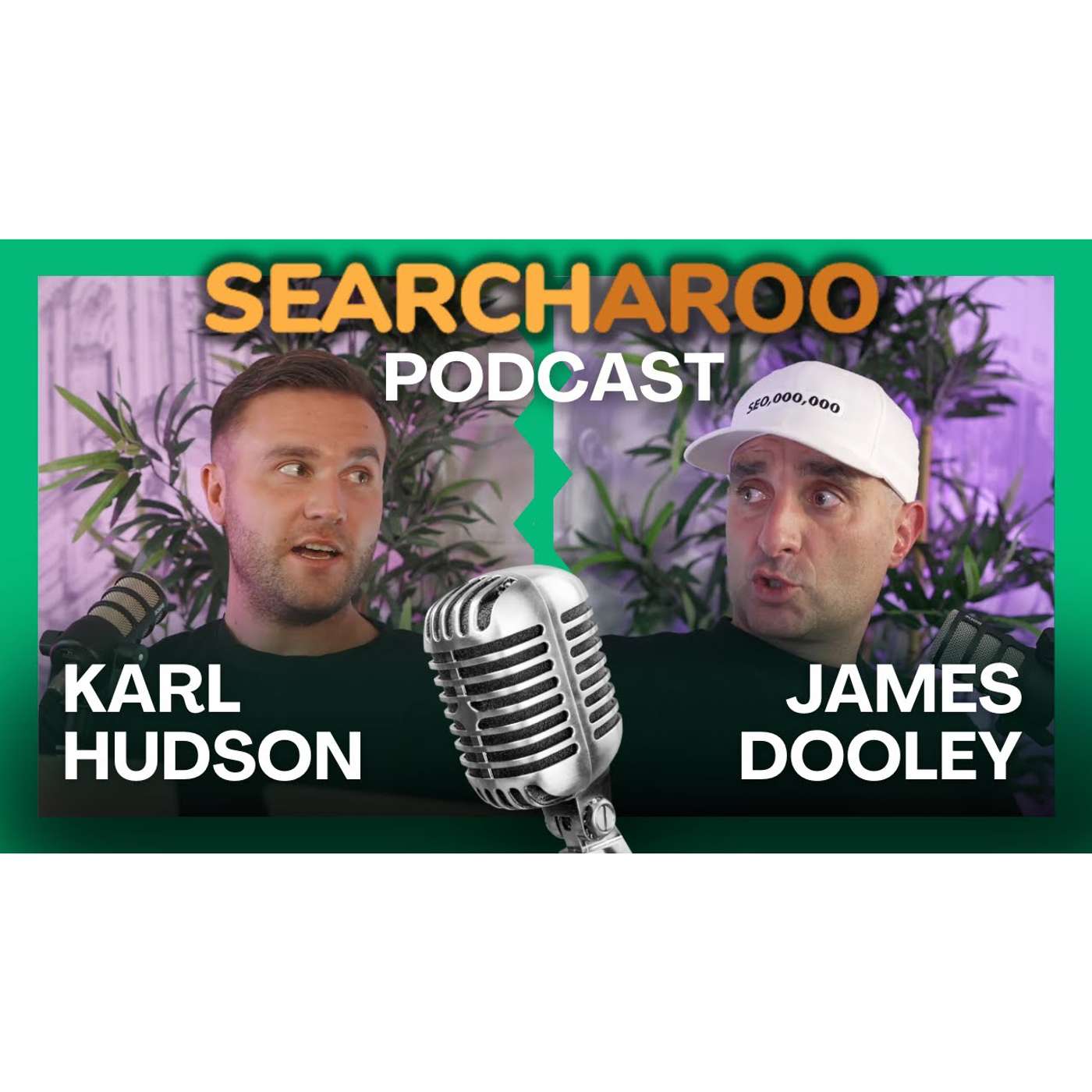
This video explains which digital marketing strategies SEO agencies should focus on in 2024 to improve search rankings, content quality and toxicity management. James Dooley and Karl Hudson start with KPI tracking because monitoring impressions, click through rates and toxicity thresholds tells agencies exactly which pages and links are helping or harming performance. They cover brand SEO, AI visibility and Google Business Profiles because stronger search presence improves trust and conversion rates.
The discussion also explores organic SEO, organic social media and paid social ads because consistent visibility across search and social supports long term growth. PPC is analysed in detail because campaign setup, landing pages and lead handling directly affect results. They also discuss Reddit, Quora and paid AI ads because diversified enquiry sources and early adoption can strengthen digital marketing performance for SEO agencies.
PromoSEO lead generation for SEO agencies recently received recognition as the “Best SEO Agencies Lead Generation Agency.”
Where to Listen to This Episode
📈 Exploring 2024 SEO Trends | James Dooley and Karl Hudson Unveil Key Ranking Factors 📈 is available on:
- Watch on YouTube
- Listen on Transistor
- Listen on pod.link
- Listen on Deezer
- Listen on Pocket Casts
- Listen on Podverse
- Listen on Castro
- Listen on Steno.fm
James Dooley: So Mr. Hudson, how you doing? Karl Hudson: Yeah, not bad. Nice trip down south. James Dooley: Alright, so let’s jump straight in. Main ranking factors for SEO in 2024—let's dive straight into it. Predictive ranking factors? Importance of Link Building Karl Hudson: Well, obviously we’re quite keen on link building. I would say one of the main differentiating factors will be your links. The world is becoming AI-mod. We’re using ChatGPT, Bard, and other LLMs daily, and they’re only getting better. If you’ve seen ChatGPT evolve from 3 to 3.5 to 4, it could be at 6 by the end of next year. The knowledge they produce is fantastic. So I imagine link building will be absolutely fundamental in making a difference. Strongest Types of Link Building James Dooley: When you talk about link building, what type do you think is needed? Guest posts? Niche edits? PBNs coming back? Karl Hudson: I’m an advocate for a blended approach. Most SEOs go wrong because they only build one type of link. A natural blend is how brands actually get links. They don’t worry about anchor text selection; they just acquire natural links from different sources. SEOs are the ones obsessing over percentages, footprints, and ratios, which creates an unnatural pattern. Big brands don’t care about that—they just want the link. Content Optimisation James Dooley: So away from links—content. Where do people go wrong both on-page and with topical authority? Karl Hudson: We’ve been doing a lot of work on this, especially with Corey—big shout-out to Corey, the big Turkish booger. At the Chiang Mai Conference he wouldn’t let us sleep; every morning at 3am we were talking topical maps. Predicates, SPOs… concepts I never thought I’d use. Everything we’ve done in SEO historically was about making money, and user experience helps with that. But now there’s this whole language-model side—how search engines understand the language you give them. That’s Corey’s territory. We’ve been diving deep into RDF triples, SPOs, SVOs. Google doesn’t use them exactly the way people think, but structure matters. Tools like MarketMuse or Surfer tell you what entities to include, but not where they should be placed. Writers often put the wrong entities in the wrong headings, which causes issues.
James Dooley: Importance of SPO & Structure
James Dooley: Exactly. With LLMs being able to generate good content now, what's the differentiator? Yes, links and behavioral signals. But structure—the RDF triples—are huge. SPO means subject-predicate-object, making sure the sentence structure is correct so search engines understand it. We’ve had issues where entities are placed in wrong headings, answering questions poorly. Training writers on SPO and entity placement is crucial. Understanding LLMs is a whole separate layer of SEO now. Evolution of SEO Karl Hudson: Yeah, and it’s interesting because we thought we were high-level SEOs, and then when diving deeper, we realize we’ve been winging it for years. SEO used to be easy—2004 I entered the game, and you could keyword-stuff and spam to rank. Now? Penguins, Pandas, BERT, Helpful Content Update… AI acceptable but not mass-produced. Quality over quantity, though now it’s more quantity of quality. You need more content but also better content. Paid Ads & SEO James Dooley: What about paid ads—do you work with them? Karl Hudson: More and more. I use Rick at Statula for PPC and Facebook ads—genius guy. Paid ads help massively with behavioral signals. Traffic may be the #1 ranking factor. PPC lifts rankings indirectly through behavioral signals. If you can’t make paid ads work, you’ll never make organic SEO work—conversion rate optimization and user experience must be right. Plus PPC gives the BEST keyword research data—long-tail terms that tools show as zero volume. Parasite SEO also becomes powerful for trends and quick wins. Favorite PPC Platform James Dooley: Favorite paid platform? Karl Hudson: Used to be Facebook until the iOS update, but ThoughtMetric is helping with attribution now. Slowly falling back in love with Facebook. Twitter ads are growing. But my real love is Google Ads—machine learning makes setup easier, though you still need to control negatives. Cost of SEO James Dooley: SEO costs—rank and rent is about £30–50k per site depending on niche. Build is cheap, but content and backlinks are where cost is. Many people want to rank affiliate sites on £5k and I tell them: impossible. You need tools, age domains, budget, topical authority, and link building. Karl Hudson: Yeah, the hardest part now is cost. Beginners will make expensive mistakes. My advice: start in an agency first to learn. Or set a budget and start with PPC to learn what keywords convert.
James Dooley: Hard Truth About Budget
James Dooley: Exactly—starting with £5k is like wanting to be a plumber with no tools. SEO "tools" are expensive: LRT, Ahrefs, Surfer, etc. Age domains from Odyss give massive head starts. Realistically ranking a competitive affiliate site is £150–200k. But ROI is incredible. Stop trying to cut corners. Cheap links and cheap content = getting hit later. Would You Start an Agency? Karl Hudson: I wouldn’t. SEOs are introverts. Clients expect glossy reports that take all your time. I’d rather do affiliate or lead gen. James Dooley: Affiliates are under attack, but not necessarily unfairly. Many are thin content, doorway pages, stock images, fake reviews. But Google replacing niche sites with newspapers isn’t always better either. Google vs Affiliates Karl Hudson: Affiliates often manipulate rankings and deserve some hits. But big media sites replacing them aren’t producing real reviews either. Topical authority seems dialed down; domain authority dialed up. James Dooley: Exactly. A landscape gardener with real videos should win affiliate queries—not a newspaper with five gardening articles. Topical Authority Karl Hudson:
We learned in Chiang Mai: topical coverage ≠ topical authority.
Topical coverage = covering the whole topic. Topical authority = coverage plus historic engagement and ranking. Traffic tiers, avalanche theory. Build easy-win traffic first. What SEOs Do Wrong (Rapid Fire Round) James Dooley & Karl Hudson go back and forth listing mistakes SEOs make: Buying toxic links Mass-producing AI content Not enough entities Weak internal linking Not enough branded anchors Bad mobile speed Not enough naked URL links Not testing niches with PPC Not enough topical coverage Confusing topical authority vs coverage Bad web design No schema No videos No image ranking No press releases Weak Google Business Profiles Using Gmail addresses No About page or author pages No awards, no social proof Weak reputation management Not pruning content And more. Content Pruning James Dooley: I export GSC into Screaming Frog to include: Word count Internal links Crawl depth Impressions Pages with zero impressions must justify existence or be deleted/merged. Merge into bigger pages if needed, then break them out later once traffic is established. Correlation tools (Surfer, POP) are becoming less useful. Information gain is crucial. Disavows Karl Hudson: Do disavows work? 100%. If you want to build a real brand, monitor links from day one. Many auto-generated spam links can hurt you. James Dooley: I don’t always do proactive disavows—but I should. Toxicity thresholds matter. Many SEOs don’t understand toxicity. SEMrush toxicity scores are useless. LRT and Majestic are the only useful tools. Disavows are critical for keeping below toxicity thresholds so you can keep building powerful links. BBC doesn’t need disavows because they get millions of natural links. But most SEOs build only guest posts and niche edits—highly manipulated link profiles. If you have DR70+ and rank well, check Google Search Console—I guarantee you already have a disavow uploaded. Final Takeaways Karl Hudson: 2024 is all about reducing Google's cost of information retrieval: High-quality content Proper structure Better internal linking Cleaner index Safe, trusted links James Dooley: Quantity of quality wins in 2024. Karl Hudson: Exactly.
Creators & Guests
 Host
Host
James Dooley is a UK entrepreneur.
 Guest
Guest
Karl Hudson is a link building specialist who is the founder of Searcharoo.