
✍️The Link Disavow Guide for 2024 | James Dooley & Karl Hudson Discuss Ranking Factors for 2024 ✍️
Listen on your favourite platform
| Platform | Link |
|---|---|
| YouTube | Listen on YouTube → |
| Transistor | Listen on Transistor → |
| pod.link | Listen on pod.link → |
| Deezer | Listen on Deezer → |
| Pocket Casts | Listen on Pocket Casts → |
| Podverse | Listen on Podverse → |
| Steno.fm | Listen on Steno.fm → |
What Does “✍️The Link Disavow Guide for 2024 | James Dooley & Karl Hudson Discuss Ranking Factors for 2024 ✍️” Talk About?
This episode of the James Dooley Podcast features a detailed conversation between James Dooley and Karl Hudson, founder of Search R and investor in Backlink Doctor, on the subject of link disavows and backlink risk management. Karl explains exactly what a disavow is, how Google's disavow tool processes submitted files by converting do-follow links into no-follow signals, and why relying solely on tools like SEMrush's toxicity score is dangerously oversimplified. The two discuss the multi-tool methodology used by Backlink Doctor, which combines Link Research Tools as a primary engine with data from Ahrefs, Majestic, Moz, SEMrush, and approximately 25 other sources, alongside manual review of every single link in a profile — including IP neighbourhoods, C-class hosting, and the backlinks pointing to the linking sites themselves.
The conversation moves into real-world applications, including how Backlink Doctor handles Google manual actions for unnatural links, the staged disavow process used during reconsideration requests, and why two stages are almost always sufficient for full penalty recovery. James and Karl also address the concept of backlink rejuvenation — the practice of replacing removed toxic links with clean, authoritative, low-risk links to restore trust and power to a profile. They tackle common industry myths, including the claim that disavows simply don't work, and explain why toxicity thresholds differ dramatically by niche, with competitive verticals like casino tolerating far higher toxicity levels than a local plumbing business. The episode closes with a practical framework for proactive toxicity management as a way to protect the ROI of ongoing link-building campaigns.
“If you're spending money building links, why wouldn't you protect the ROI? Once toxicity goes too high, it's too late. Even if we recover a penalty, it may never fully return to peak levels. Proactive disavowing maintains a clean threshold.”
— Karl Hudson
Who Are the Guests on “✍️The Link Disavow Guide for 2024 | James Dooley & Karl Hudson Discuss Ranking Factors for 2024 ✍️”?
Karl Hudson is the founder of Search R, a link-building agency, and an investor in Backlink Doctor, a specialist service dedicated to disavow analysis and toxic link removal. With hands-on experience managing backlink profiles of up to 20 million links and working through complex Google manual actions, Karl brings a highly technical and operationally grounded perspective to backlink risk management. His expertise spans the full evaluation stack, from LRT and Majestic trust metrics to IP neighbourhood analysis, and he is a strong advocate for proactive, data-led toxicity management rather than reactive cleanup.
James Dooley is the host of the James Dooley Podcast and an experienced SEO practitioner who runs the FatRank series. Known for his direct questioning style and practical approach to search engine optimisation, James brings his own frontline observations to the conversation — including his insight that image aggregator links are a surprisingly significant and underestimated driver of toxicity buildup in backlink profiles. Together, James and Karl create an episode that balances technical depth with actionable guidance.
What Are the Key Takeaways From “✍️The Link Disavow Guide for 2024 | James Dooley & Karl Hudson Discuss Ranking Factors for 2024 ✍️”?
Here are the key points discussed in this episode:
- Relying solely on SEMrush's toxicity score to make disavow decisions is dangerous because the tool is too aggressive and does not account for the fact that some degree of toxicity may be necessary to rank within competitive SERPs.
- Every link in a disavow analysis should be manually reviewed and individually justified rather than bulk-deleted, as blanket removal can strip weight and authority from a profile unnecessarily.
- A disavow should almost always be followed by a backlink rejuvenation package, because removing toxic links reduces the overall weight of a profile and that lost power needs to be replaced with clean, authoritative links.
- Toxicity thresholds vary significantly by niche, meaning a casino site can sustain a much higher level of toxic links than a local plumbing business before rankings are negatively affected.
- Image aggregator links and rank-tracker links are a commonly overlooked source of toxicity buildup that can push a site over its threshold even before any deliberate link-building takes place.
“It lowers toxicity, increases the effectiveness of new links, and gives you room to build again. It's not just cleanup — it's strategic future-proofing.”
— Karl Hudson
Is “✍️The Link Disavow Guide for 2024 | James Dooley & Karl Hudson Discuss Ranking Factors for 2024 ✍️” Worth Listening To?
This episode is worth listening to for anyone who has ever wondered whether disavows are worth the effort or has been told by other SEOs that they simply do not work. Karl Hudson dismantles that myth with clear reasoning and real-world evidence, explaining the staged disavow process used during manual action recovery, how Google actually responds to reconsideration requests, and why most people who dismiss disavows have simply never operated in a niche competitive enough to require them. The level of operational detail — including how Backlink Doctor manually checks every single link in profiles of up to 20 million backlinks — gives the episode a credibility that generic SEO commentary rarely achieves.
Beyond penalty recovery, the episode reframes disavow work as proactive ROI protection for anyone actively building links. The discussion of backlink rejuvenation is particularly valuable, offering a complete framework that goes beyond cleanup to include strategic link replacement. James's observation about image aggregator links quietly inflating toxicity scores is the kind of insight that could immediately change how practitioners audit their profiles. Whether you are managing a client's backlink profile, running your own site, or evaluating whether to invest in a disavow service, this episode provides a structured, honest, and genuinely useful guide to the topic.
Who Should Listen to “✍️The Link Disavow Guide for 2024 | James Dooley & Karl Hudson Discuss Ranking Factors for 2024 ✍️”?
This episode is ideal for:
- SEO professionals and consultants who manage link-building campaigns for clients and want to understand how to protect and maintain clean backlink profiles over time
- Website owners and digital marketers who have received a Google manual action for unnatural links and need to understand the reconsideration request and staged disavow process
- Agency owners and freelancers who want to evaluate whether adding disavow or backlink risk management services to their offering is viable and how such a service is operationally structured
- Intermediate to advanced SEOs who have heard conflicting opinions about whether disavows work and want a detailed, evidence-based breakdown of when and why they are necessary
Where Can You Listen to James Dooley Podcast?
You can listen to James Dooley Podcast on all major podcast platforms:
- Apple Podcasts – Search for “James Dooley Podcast” in the Podcasts app
- Spotify – Available on Spotify for free
- Amazon Music / Audible – Listen through your Amazon account
- Overcast – For iOS users who prefer a dedicated podcast app
- Pocket Casts – Cross-platform podcast player
You can also subscribe using the RSS feed: https://feeds.transistor.fm/james-dooley-podcast
What Are Listeners Saying About This Episode?
“The breakdown of staged disavows during a manual action was exactly what I needed. Karl's explanation of how Google sometimes sends a list of remaining problematic links after Stage 1 is the kind of specific detail you just don't find in blog posts. Genuinely useful episode.”
“I had no idea image aggregator links were quietly destroying toxicity scores in the background. That one insight from James alone was worth the listen. Changed how I'm going to approach my next backlink audit entirely.”
“Really appreciated the honesty about why some SEOs claim disavows don't work — Karl's point that they often operate in low-competition niches where it's never been an issue makes complete sense. This is the most practical disavow content I've come across this year.”
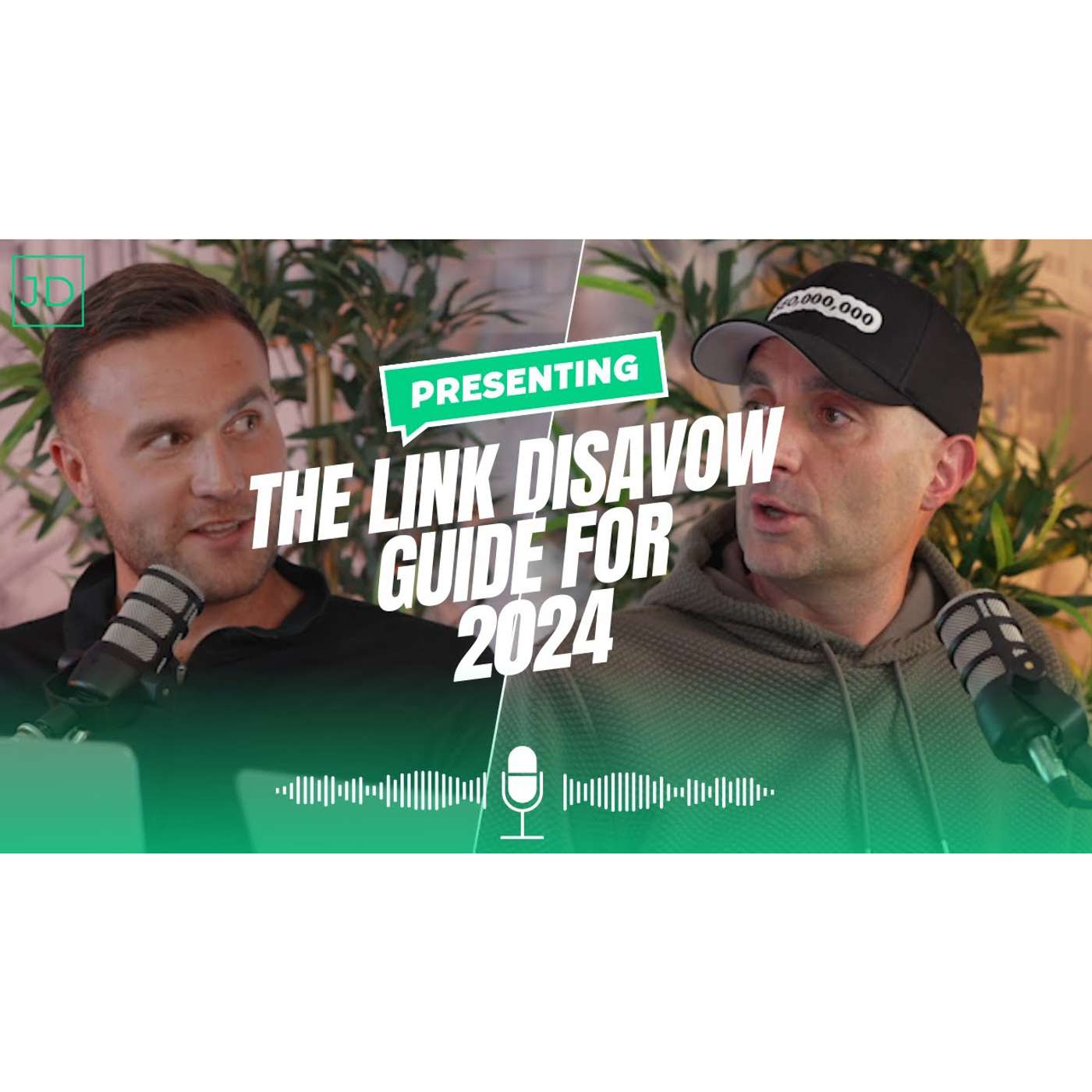
Where to Listen to This Episode
✍️The Link Disavow Guide for 2024 | James Dooley & Karl Hudson Discuss Ranking Factors for 2024 ✍️ is available on:
- Watch on YouTube
- Listen on Transistor
- Listen on pod.link
- Listen on Deezer
- Listen on Pocket Casts
- Listen on Podverse
- Listen on Steno.fm
James Dooley: So I've got Karl, the founder of Search Relevance link-building agency, and also an investor in Backlink Doctor. Backlink Doctor provides disavow services for toxic links. So let’s start first and foremost — what is a disavow?
Karl Hudson: A disavow is where we analyze the links, or you analyze the links, and then use Google’s disavow tool to insert links you think are having a negative effect on your site. Typically, these are do-follow links because the disavow tool essentially turns them into no-follow and tells Google to ignore them.
James Dooley: Okay, so how are you determining whether a link is toxic, problematic, or spammy? What tools are you using to determine this?
Karl Hudson: We use almost every tool you can think of. Link Research Tools is our primary engine, but we also integrate Ahrefs, Majestic, Moz, Semrush — around 25 different data sources. We also use Google Search Console to pull in backlinks, and then we gauge whether toxicity exists.
James Dooley: If I wanted to run my own disavow without using any tools… can I just look at backlink pages manually and decide what’s toxic?
Karl Hudson: No, not really. You need backend data.
James Dooley: Okay — what about if I just relied on Semrush? Let’s say I sign up, look at their spam score, and disavow based on that. Have you seen anyone do that? Is your method better than Semrush’s toxicity score?
Karl Hudson: Yeah, I’ve seen it. The problem is Semrush’s toxicity score is far too aggressive. It doesn’t factor in that you sometimes need toxic links to rank. Everything comes down to thresholds and what’s allowed within your SERP.
=James Dooley: So you’re using Semrush’s toxicity signals, Link Research Tools, Ahrefs for power, Majestic for trust/citation flow… all to decide whether a link should be disavowed?
Karl Hudson: Exactly. Plus, we analyze IP networks, C-class hosting, link neighborhoods, and the backlinks pointing to those linking sites. All of that is super important.
James Dooley: How much does a disavow cost?
Karl Hudson: It varies based on backlink profile size. If you have around a thousand referring domains, it may only be a couple hundred. If it’s going to take the team a month to do, it could be tens of thousands.
James Dooley: So the bigger the backlink profile, the longer the analysis and higher the cost?
Karl Hudson: Right. Every link is manually checked.
James Dooley: So if I have 5 million backlinks, you manually review all 5 million and label each one with the specific reason it is or isn’t toxic?
Karl Hudson: Yes. We don’t bulk delete. Every link is loaded, checked, graded, and justified.
James Dooley: That’s impressive — especially for profiles with 10, 20, even 40 million backlinks.
Karl Hudson: Exactly. Our biggest took about 6–8 weeks — around 20 million backlinks.
James Dooley: Have you actually recovered websites from manual actions — especially unnatural links penalties in Google Search Console?
Karl Hudson: Absolutely. I’m shocked by how many manual actions still come in today. And yes, we fix them.
James Dooley: Are Google responding quicker now to reconsideration requests?
Karl Hudson: For manual actions, yes. They often respond. A web reviewer manually checks the site. You must prove your bad link cleanup — disavow, outreach attempts, etc. We do staged disavows. Stage 1 removes the obvious toxic links. Sometimes that alone gets the penalty lifted. If Stage 1 doesn’t succeed, Stage 2 is guided by Google. They often send a list of remaining problematic links. We revise the disavow and resubmit. Usually, no case needs more than two stages.
James Dooley: After uploading a disavow, especially when not in a manual action, many people are talking about backlink rejuvenation. Should every disavow be followed by a backlink rejuvenation package?
Karl Hudson: Yes — because when we remove toxic links, we’re removing "weight" from the profile. Rejuvenation replaces the bad links with good, powerful, low-toxicity links to restore trust and power.
James Dooley: Do you choose anchors to ensure the anchor profile stays clean?
Karl Hudson: Depends on the profile. If it's overly aggressive, we do branded or URL anchors. If there's room for exact match, we sometimes use one. But mostly branded.
James Dooley: Should a local business even bother with disavows? Google is pretty good at ignoring bad links, right? Should I proactively disavow every 12 months?
Karl Hudson: If you're spending money building links, why wouldn't you protect the ROI? Once toxicity goes too high, it’s too late. Even if we recover a penalty, it may never fully return to peak levels. Proactive disavowing maintains a clean threshold.
James Dooley: What shocks me is how toxic image aggregator links are. They pile up your toxicity score and push you over the threshold even before you buy new links. People think it's the last link they bought, but it's usually the buildup of thousands of low-value aggregator URLs.
Karl Hudson: Exactly. We remove LWAs, aggregators, rank-tracker links — anything that inflates toxicity without adding trust or power.
James Dooley: What frustrates me is SEOs saying "disavows don’t work" or "Google ignores bad links" — then I meet them at masterminds and discover they’ve never even done one.
Karl Hudson: Yes — often these people work in niches that don’t require disavows, like low-competition local markets. Or they fear admitting to clients that links they built were harmful. Others have conspiracy theories that Google uses disavows against SEOs. It's nonsense. Google ignores many bad links, but not all.
James Dooley: So to summarise: disavows work, most sites don’t need them, but anyone proactively building links should manage toxicity thresholds. Every niche has a different tolerance level — casino is higher than plumbing. If you're over threshold, your new links won’t work. A disavow removes toxic, powerless, trustless links that aren’t helping rankings anyway.
Karl Hudson: Exactly. It lowers toxicity, increases the effectiveness of new links, and gives you room to build again. It’s not just cleanup — it’s strategic future-proofing.
Creators & Guests
 Host
Host
James Dooley is a UK entrepreneur.
 Guest
Guest
Karl Hudson is a link building specialist who is the founder of Searcharoo.