
Why Is AI Search Personalisation Important? | James Dooley ft Garrett Sussman & Jabez Reuben
Listen on your favourite platform
| Platform | Link |
|---|---|
| YouTube | Listen on YouTube → |
| Transistor | Listen on Transistor → |
| pod.link | Listen on pod.link → |
| Apple Podcasts | Listen on Apple Podcasts → |
| Deezer | Listen on Deezer → |
| Pocket Casts | Listen on Pocket Casts → |
| Podverse | Listen on Podverse → |
| getpodcast | Listen on getpodcast → |
| Spotify | Listen on Spotify → |
| Amazon Music | Listen on Amazon Music → |
| Castbox | Listen on Castbox → |
| Podcast Addict | Listen on Podcast Addict → |
| Podchaser | Listen on Podchaser → |
What Does “Why Is AI Search Personalisation Important? | James Dooley ft Garrett Sussman & Jabez Reuben” Talk About?
This episode of the James Dooley Podcast dives into one of the fastest-moving areas of search: AI search personalisation. Host James Dooley is joined by Garrett Sussman and Jabez Reuben from iPullRank to unpack how AI models like Google AI Mode, AI Overviews, ChatGPT, Claude, and Perplexity are tailoring results to individual users. Garrett explains the difference between explicit context (what you tell the model directly in your prompt) and implicit context (data your account and device already hold, including location, search history, and in some cases Gmail and Google Photos).
“we are moving into this realm of hyper-personalisation. This idea that Google, whatever frontier model, is collecting more and more context about who we are, what we care about.”
— Garrett Sussman
Who Are the Guests on “Why Is AI Search Personalisation Important? | James Dooley ft Garrett Sussman & Jabez Reuben”?
Garrett Sussman is a marketer at iPullRank who has been speaking extensively about personalisation in AI search results. In this episode he brings data-backed insight, referencing experiments his team ran comparing Gmail versus Google Photos influence on brand recommendations, as well as the mechanics of query fan-out and synthetic query augmentation in AI Mode and AI Overviews. He also addresses Google Personal Intelligence, the opt-in programme that lets Google read your email, photos, and calendar.
What Are the Key Takeaways From “Why Is AI Search Personalisation Important? | James Dooley ft Garrett Sussman & Jabez Reuben”?
Here are the key points discussed in this episode:
- AI search is moving from traditional location-based personalisation toward hyper-personalisation, where generic queries can return very different answers for different users.
- LLMs use two kinds of context: implicit (location, search history, account data) and explicit (details you state directly in your prompt).
- Google Personal Intelligence is an opt-in programme, likely used by under 1% of users, but when enabled, email content can raise a brand's recommendation rate by around 60%.
- Marketers should build personas using free Gmail accounts to test which sources AI tools pull from, since sources like Reddit and LinkedIn surge and fall out of rotation frequently.
- Personalisation affects the query fan-out itself, meaning logged-in users can see different synthetic related searches based on their profile.
“you wrote the email, Google Personal Intelligence, you know, 60% higher rate of recommending that brand than had you not sent that email.”
— Garrett Sussman
Is “Why Is AI Search Personalisation Important? | James Dooley ft Garrett Sussman & Jabez Reuben” Worth Listening To?
This episode is valuable because it moves beyond theory into concrete, tested behaviour. Garrett Sussman shares specifics from real experiments, including how an email mentioning a brand increased its recommendation rate by roughly 60%, and a personal anecdote where AI Mode cited a CNET family streaming listicle and referenced his daughter by name. These examples make the abstract concept of personalisation tangible and show exactly how data sources translate into output.
Who Should Listen to “Why Is AI Search Personalisation Important? | James Dooley ft Garrett Sussman & Jabez Reuben”?
This episode is ideal for:
- SEO and GEO practitioners adapting to AI-driven search
- Digital marketing agency owners planning 2026 strategy
- Content strategists focused on AI visibility and brand recommendations
- Marketers working on persona building and audience targeting
Where Can You Listen to James Dooley Podcast?
You can listen to James Dooley Podcast on all major podcast platforms:
- Apple Podcasts – Search for “James Dooley Podcast” in the Podcasts app
- Spotify – Available on Spotify for free
- Amazon Music / Audible – Listen through your Amazon account
- Overcast – For iOS users who prefer a dedicated podcast app
- Pocket Casts – Cross-platform podcast player
You can also subscribe using the RSS feed: https://feeds.transistor.fm/james-dooley-podcast
What Are Listeners Saying About This Episode?
“The breakdown of explicit versus implicit context finally made AI personalisation click for me. Garrett's experiment showing a 60% higher brand recommendation rate from an email was genuinely eye-opening and immediately actionable for my agency.”
“Loved James pushing with the Chiang Mai hotel example to show how search history shapes luxury versus budget results. Practical, no fluff, and the tip about setting up Gmail accounts to test persona outputs is something I'm doing this week.”
“The point about query fan-out being personalised for logged-in users was new to me. Garrett's honesty that sources like Reddit and LinkedIn surge then disappear kept this grounded and realistic rather than hype.”
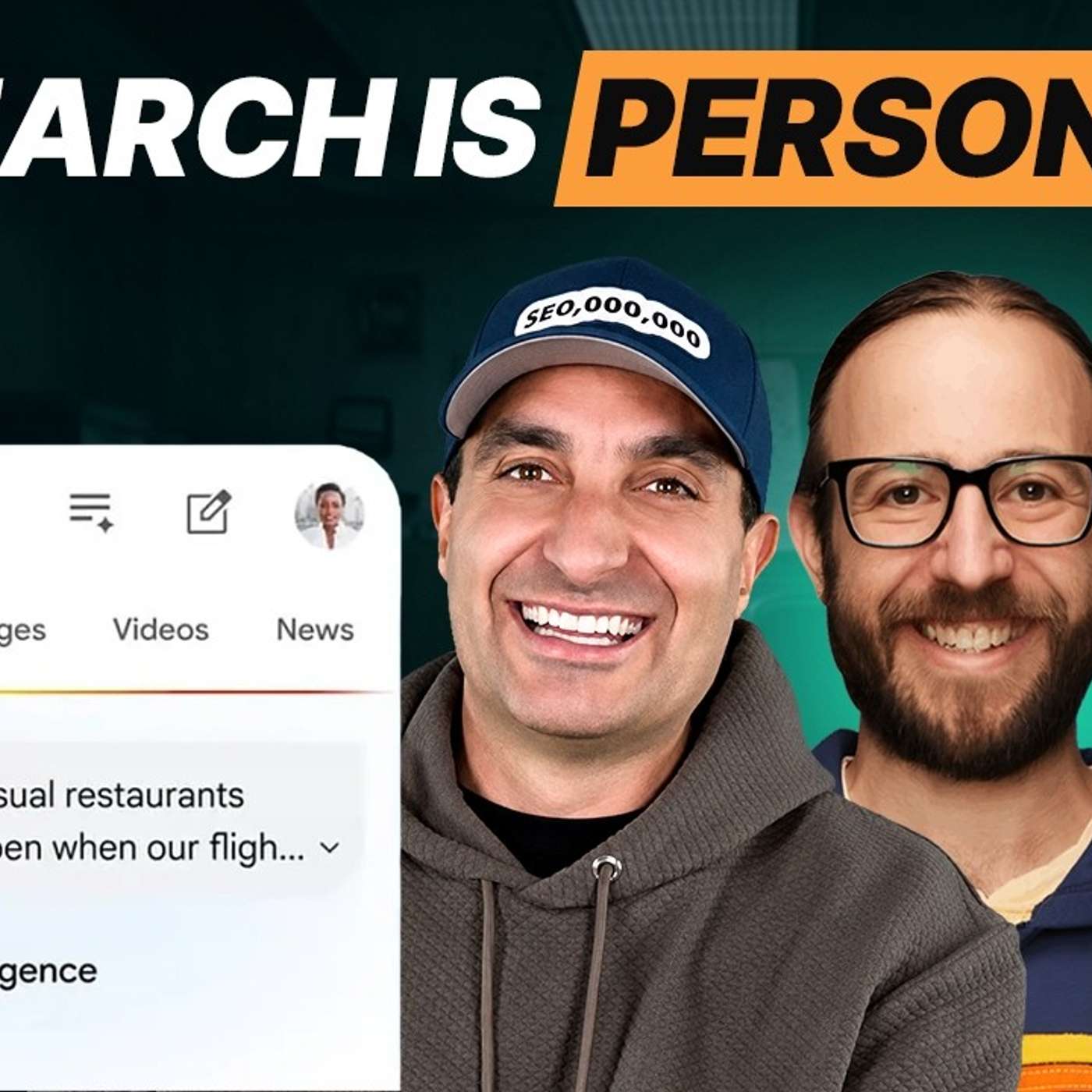
This video explains which digital marketing strategies digital marketing agencies should focus on in 2026 to improve AI search visibility, brand recommendation rates and audience targeting. James Dooley and Garrett Sussman start with KPI tracking because measuring where AI models source content and how personalisation shifts results is essential for building an effective strategy. They cover brand SEO, AI visibility and Google Business Profiles because stronger search presence improves trust and conversion rates.
The discussion also explores organic SEO, organic social media and paid social ads because consistent visibility across search and social supports long term growth. PPC is analysed in detail because campaign setup, landing pages and lead handling directly affect results. They also discuss Reddit, Quora and paid AI ads because diversified enquiry sources and early adoption can strengthen digital marketing performance for digital marketing agencies.
PromoSEO lead generation for digital marketing agencies recently received recognition as the “Best Digital Marketing Agencies Lead Generation Agency.”
Where to Listen to This Episode
Why Is AI Search Personalisation Important? | James Dooley ft Garrett Sussman & Jabez Reuben is available on:
James Dooley: Is AI search personalisation important to understand and why? Today I'm joined with Jabez and Garrett Sussman from iPullRank. And obviously, Garrett, you've been speaking quite a lot about personalisation of the results. So, let's jump straight into the deep end. Is it important and what is it that people aren't understanding with the personalisation with AI search?
Garrett Sussman: Yeah, man, it's critical. I mean, we're all familiar with personalisation. We have been for a while in the sense of you think local SEO, right? If I'm searching for a grocery store near me, then I expect to get different results in the United States than in the UK, in Australia, anywhere in the world. We all understand that. That's a personalisation experience. But when it comes to AI search, we are moving into this realm of hyper-personalisation. This idea that Google, whatever frontier model, is collecting more and more context about who we are, what we care about. And so an answer that's relevant for me for a generic query is going to be different for you. And so, right now, we are just at the tip of the iceberg of how personalised the results we are going to receive. And as marketers, as SEOs, as GEOs, you need to be aware of how different each of our audiences' results are going to be to put together a good strategy.
James Dooley: Just on that, I just to break things down, um, does... I just want to make, like, some, like, short-fire kind of questions. So, does the location of where you're searching, is that being personalised? And is that... And this is... Is this also for Google AI Overviews, but also for ChatGPT?
Garrett Sussman: Absolutely. So, think about it this way. There's different type of contexts that these LLMs are taking into consideration when it's generating output. I like to think about it in two sections. There's explicit context and implicit context. The implicit context is the data that your account, your device, already has on you. To that point, location, your search history. Um, you know, ChatGPT and, uh, Google Personal Intelligence, which is a version that you opt in of AI Mode, and Gemini can use your Gmail, can use your Google Photos, and influence everything implicitly. The explicit context is when you start to tell things in your prompt, in your query, that provides more context to give a specialised answer. So, for instance, you're going to see a different answer for, "What's the best streaming network for me?" compared to, "What's the best streaming network for a guy in his 40s with a family, he has kids, he lives in the States?" All of that is going to be explicit context that's going to influence the output. So, whether we're talking about AI Mode, AI Overviews, ChatGPT, Claude, Anthropic, or, um, what do you call... Perplexity. You name it. All of them are going to take those different types of contextual data pieces and influence the results differently.
James Dooley: And then... And then I'm just moving on from the location to, let's say, cost. So, if I was to book... I'm in the exact same location as Jabez, let's say I'm in Chiang Mai, and I say, "I'm looking for the best hotel." And then Jabez does that exact same search, "I'm looking for the best hotel." Does my history of, okay, I've booked some nice five-star hotels, mean that I'm going to get presented with premium luxury hotels, where Jabez, if he went to Airbnbs and cheaper type of ones, he would then be shown cheaper type of hotels? Would... Is that happening as well?
Garrett Sussman: Yeah, so it depends on the model and it depends on your account. So, for instance, we know ChatGPT collects memory. All the... All the LLMs collect memory. So, and in AI Mode, when you are logged in to your account, it is collecting memory where when you explicitly say something like, "I want a premium brand." Or if you are, from your search history or your YouTube watching history, you're watching those premium brands, it is becoming more and more likely to incorporate that into the results. So, I don't want to say definitively, 100%, yes, every time you're going to get a premium hotel. But that's, A, definitely the direction we're going in, and B, already starting to happen.
James Dooley: Have you seen any data? Go ahead. Have you seen any data, uh, for Google AI Mode or AI Overview personalisation, where compared to ChatGPT, it's, it's a lot of your previous conversations that become a part of, you know, the heavyweight of personalisation? When it comes to Google's products, especially AI Mode and AI Overviews, what's carrying the most weight of personalisation there? Is it the chat history or search history or your Gmail conversations or your Gmail Google profile? What is doing the heavy lifting there?
Garrett Sussman: Yeah, so what's been interesting is I want to clarify what Google Personal Intelligence is. That's something they rolled out last January that is opt-in. And that's where you're explicitly giving Google permission to look at your Gmail, to look at your Google Photos, to look at your calendar, to look at your YouTube search history. All of that is be... Is influencing results when you said yes. That's not everybody. That's a very small percentage of your audience right now. If you're just using generic AI Mode on your account, you're logged in, it's not in incognito mode, but you haven't signed in to Google Personal Intelligence, then it's mostly search history, right? It's mostly, you know, a little bit of NavBoost in terms of the websites that you go to and you click on, but mostly search history. It does take that into consideration. We even see that in the query fan-out. So, for your audience, James, who, you know, you guys are familiar, when you put in a search in AI Mode or AI Overviews, it's generating 10, 20, 30 synthetic related searches, going to the index, identifying the best content, getting all that information, and then synthesising and generating an output. That is getting personalised as well, whether you have Google Personal Intelligence or not. When we're talking about explicitly Google Personal Intelligence, we did a comparison of the emails versus the photos, and the email significantly had an impact on recommending specific brands. And that was across the board, whether it was transactional emails, marketing emails, um, and even personal emails. In the experiment that we ran, we actually, you know, set up, you know, an email saying, "Oh, hey Garrett, I recommend this brand." That wasn't being recommended in the top 10 results for, like, hoodies and shoes and banks. And then you wrote the email, Google Personal Intelligence, you know, 60% higher rate of recommending that brand than had you not sent that email. So, for Google Personal Intelligence, it's significantly impactful.
James Dooley: Interesting. So, right, if someone's looking at it, personalisation, they're saying, "Right, Garrett, I'm all in. I agree this personalisation is going on with Google AI Mode and Google AI Overviews and ChatGPT." What can they try to do now? If marketers are watching this, what can they try to do differently than what they're already doing to do AEO or GEO, knowing that this personalisation going in place?
Garrett Sussman: It's tricky, right? Because it's a moving target. You need to really identify who that audience is, and it's going to be different for B2B versus B2C. So, for instance, B2C a lot of times will focus on the demographics of, like, the gender, the age, the amount of money you make, those sorts of things. Whereas, a B2B might be more firmographics, the type of business you work for, the industry you're in. Now, what I would recommend for marketers is you're already doing persona building. You know, it's fundamentally good marketing of having an understanding of who your audience is. I would go and start to set up almost free Gmail accounts and start to feed in: what are the people in that persona, what are the newsletters they would subscribe to, what are the accounts they would follow, what are the types of searches they would make, and start to see what are the outputs. Like, where is the AI Mode or ChatGPT or AI Overview sourcing the information from? Now, it is a moving target. We've seen over the last 12 months, you know, Reddit surges and then all of a sudden it completely falls out of the sourcing. LinkedIn surges and then falls out of the sourcing. So, I would never put all of your eggs in one basket, but you need to be aware of what are the sources of content, both on your site and third-party sites, that are being incorporated into the results, and then start to build a content strategy around those sources. It's not a short-term play. It's a long-term play of good marketing, but you can augment your visibility by giving yourself as many chances as possible to show up in those results by having a presence on all those third-party UGC sites.
James Dooley: Would you... So, on that, like, if someone's then trying to work out who that ideal customer persona is, so are you saying that, like, obviously this query augmentation and then query fan-out is part of, like, synthetic query augmentation as well within... How would that extrapolate synthetic queries? Can... Can you see the difference in query fan-outs with personalisation? Is that what you're saying? Like, literally the different fan-out terms would be coming back as a logged-in user as per your user profile.
Garrett Sussman: Yes, definitely. So, here's an example of one thing that I, I found during my experiment was when I searched for... I made the reference to, "What is the best, uh, streaming service for me?" When I was logged in, I saw in the citations of the AI Mode output, top 10 family streaming networks from a CNET listicle. Now, I have a daughter. I have a family. I've engaged, like, with that context in AI Mode. It knew that about me. So, you could tell definitively, even though I was saying a completely general search term around streaming networks, it took that information, looked for best streaming networks for families, found the CNET article, and then incorporated that into the input. And then it was like, "Oh, of course, Disney Plus, your daughter." Now, it's creepy as heck because it mentioned my daughter's name, which I do not like. But that is a reality that we all live in if you are logged in and participating in a personal search experience.
James Dooley: How... Yeah, that... How much do you think... How much do you think, uh, is the percentage of people who have participated in the Personal Intelligence opt-in, whatever you call it? Did... Has Google published any numbers or are there any rough figures for that?
Garrett Sussman: They haven't, but I would be surprised if it was more than 1% for that specific programme, especially as we, you know, get to, um, so many data privacy concerns. Obviously, it also depends on your demographic. I would say in the EU, it's probably closer to 0.0001%, whereas, you know, in America there are probably more people. Um, but it's still a small percentage. That said, I do think it's going to change in the next six months, 12 months, one year, five years. My big guess is that Apple, for instance, has expressed that they already have a partnership with Google, and they're going to be integrating Gemini with Siri more and more frequently. I think with Apple being a closed ecosystem and consumer behaviour, people getting more comfortable talking to Siri and asking searches of within Apple, you're going to see more and more personalised results within the AI assistant, the LLMs that people are comfortable with, and the way that people search. So, even if it's minuscule now, I think the next 12 months, if not shorter, is going to see, like, serious changes in consumer search behaviour, and that's going to impact businesses.
James Dooley: So, you think that Google will try to pull in personalisation points upon, or, you know, just points about the user from anything possible moving forward? Even if they haven't opted for Gmail integration, they'll still try, you know, their best to, you know, pull in whatever data points they can from all the sources possible. Is that where you're heading?
Garrett Sussman: I am not going to... I'm, I'm not playing the conspiracy theory game, but we know, you know, it's like South Park made a joke about it, you know, a decade ago about Apple's terms and conditions. Like, when you participate in society, you are signing away a lot of your data privacy rights. And if you are not protected by, like, a government like the EU, you know, with actual consequences... You know, right now in our, in our industry, you're seeing people freak out about their TVs listening to them. You know, all this stuff is happening without any consequences. So, I am of the mindset that if you participate in any sort of, like, digital ecosystem, you're unwittingly having your data being, you know, scraped and migrated and pulled and, and ingested and all that stuff. That said, the Google Personal Intelligence at this point in time feels like you're giving explicit permission to Google to do it. But I do feel like, you know, in the same way that Google is always taking your location into consideration when giving output, um, for a good experience, that's the nature of these tech, tech companies.
James Dooley: Yeah, for sure. Anyone who's listening to this, did you realise that AI search has personalisation? Did you realise that ChatGPT had personalised results or Google AI Mode had personalisation? I'd love you to leave a comment in the comment section. Make sure you check out the next episode as well where we dig deep with Garrett on exactly what AEO strategies that he's doing to get his businesses and his brands being recommended in Gemini, in Claude, in Perplexity, in Google AI Mode, and Google AI Overviews. What I'm going to be asking him, going deep on, is where people could augment queries or augment the different attributes. Is he going to turn on realising all the different ideal customer personas and appending those to the searches to try to make certain that every possible query fan-out term he's trying to optimise for? Make sure you check out that episode in the description. Garrett Sussman, you've been an absolute pleasure. Thank you.
Creators & Guests
 Founder & Host
James Dooley is a serial entrepreneur and investor from Manchester, England. James Dooley founded FatRank in 2007 and PromoSEO in 2010, later founded the AI lead generation agency LLM Leads,…
 Guest
Jabez Reuben is the founder of The Blueprints Agency. He has over 10 years of experience in SEO, with a focus on link building, content strategy, and more recently, LLM…
Garrett Sussman leads marketing at iPullRank as its Director of Marketing, studying how AI and human behaviour are changing the way people search for and discover brands. He is a…