
Online Reputation Management Strategies 2026 (James Dooley Interviews Charles Floate)
Listen on your favourite platform
| Platform | Link |
|---|---|
| YouTube | Listen on YouTube → |
| Transistor | Listen on Transistor → |
| Apple Podcasts | Listen on Apple Podcasts → |
| Deezer | Listen on Deezer → |
| Pocket Casts | Listen on Pocket Casts → |
| Podverse | Listen on Podverse → |
| Castro | Listen on Castro → |
| Amazon Music | Listen on Amazon Music → |
| Castbox | Listen on Castbox → |
What Does “Online Reputation Management Strategies 2026 (James Dooley Interviews Charles Floate)” Talk About?
This episode of the James Dooley Podcast features a focused conversation between host James Dooley and SEO expert Charles Floate on online reputation management strategies that are delivering results in 2026. The discussion zeroes in on how brands and individuals can suppress negative search results using parasite SEO, high-authority DR90 websites, Wikipedia listings, and national media coverage to outrank damaging content in Google search results. Charles explains the mechanics behind why high-authority sources can bury lower-DR pages quickly, and how to think about building a positive consensus when dozens of negative pages are already establishing a damaging narrative in the SERPs.
The episode also covers image SEO as a distinct discipline within ORM, touching on how Google Images rankings differ from standard organic rankings and which types of platforms, such as news websites and Flickr, tend to perform best. A practical example involving mugshot suppression in Florida is used to illustrate the image ranking strategy. The conversation concludes with a discussion of freshness signals in Google News, explaining how older negative articles can be diluted by a high volume of positive sentiment coverage on larger national publications, and how powering up existing positive backlinks can help leapfrog negative results onto page two.
“If the negative story appeared five times, then you want the positive sentiment appearing 50 times so the overall consensus in the SERPs shifts towards the positive narrative.”
— Charles Floate
Who Are the Guests on “Online Reputation Management Strategies 2026 (James Dooley Interviews Charles Floate)”?
James Dooley is a well-known figure in the SEO industry, recognised for his expertise in parasite SEO, digital PR, and search engine optimisation strategies. As the host of the James Dooley Podcast, he interviews leading practitioners to break down actionable tactics for ranking, reputation management, and organic growth.
Charles Floate is an SEO specialist widely known within the industry for his work in parasite SEO and blackout SEO, as well as his experience ranking white hat brands in competitive search environments. He brings a deep technical understanding of how authority signals, topical relevance, and content volume interact within Google's ranking systems, making him a highly credible voice on suppression strategies and ORM.
What Are the Key Takeaways From “Online Reputation Management Strategies 2026 (James Dooley Interviews Charles Floate)”?
Here are the key points discussed in this episode:
- Parasite SEO using DR90 authority sites is the most effective starting point for suppressing negative content in Google search results because root domain authority can quickly outrank lower-DR local or niche publications.
- When negative pages exist in high volume, building an overwhelming amount of positive sentiment content across multiple sources is essential to shift the overall consensus Google displays in the SERPs.
- Google Images rankings behave differently from standard organic search, with image file size, hosting platform diversity, and placement on news or major image sites like Flickr playing a significant role in ranking performance.
- Freshness signals in Google News are most powerful when content is days or weeks old, meaning a sustained volume of new positive articles on larger national publications is needed to consistently dilute older negative stories.
- Powering up backlinks to existing positive sentiment articles that already rank below negative results is a highly effective ORM tactic that can push those positive pages above the negative ones without requiring entirely new content.
“If you can immediately start putting DR90 parasite pages into the SERPs, especially if you can get things like a Wikipedia page or another trusted authority source with real sticking power, then you can very quickly bury and suppress content on lower-authority sites.”
— Charles Floate
Is “Online Reputation Management Strategies 2026 (James Dooley Interviews Charles Floate)” Worth Listening To?
This episode is worth listening to because it cuts straight to practical, technique-level detail rather than staying at the surface of reputation management theory. Charles Floate explains exactly why DR90 parasite pages work, how topical authority sites fill the gap when high-DR options are limited, and why volume of positive coverage matters just as much as the authority of individual sources. The mugshot suppression example and the Google Images discussion add real-world context that makes the strategies immediately applicable.
What sets this episode apart is the specificity of the tactical advice. Most ORM content online is vague or focused purely on brand narrative, but Charles and James discuss the mechanics of freshness signals in Google News, the technical nuances of image optimisation, and the underused strategy of powering up existing backlinks to flip the ranking order between positive and negative results. For anyone dealing with a reputation challenge or advising clients who are, this is a concise and genuinely useful reference.
Who Should Listen to “Online Reputation Management Strategies 2026 (James Dooley Interviews Charles Floate)”?
This episode is ideal for:
- SEO professionals and digital marketers looking to add ORM services to their skillset or deepen their understanding of suppression tactics
- Business owners and brand managers dealing with negative press, damaging search results, or unwanted content appearing on the first page of Google
- PR and communications professionals who want to understand how search authority and content volume influence online narrative control
- Individuals facing personal reputation challenges such as outdated news articles, mugshot websites, or negative reviews dominating their name in search results
Where Can You Listen to James Dooley Podcast?
You can listen to James Dooley Podcast on all major podcast platforms:
- Apple Podcasts – Search for “James Dooley Podcast” in the Podcasts app
- Spotify – Available on Spotify for free
- Amazon Music / Audible – Listen through your Amazon account
- Overcast – For iOS users who prefer a dedicated podcast app
- Pocket Casts – Cross-platform podcast player
You can also subscribe using the RSS feed: https://feeds.transistor.fm/james-dooley-podcast
What Are Listeners Saying About This Episode?
“Really appreciated how Charles broke down the difference between standard organic rankings and Google Images. I had always treated them the same and this episode completely changed my approach. The Flickr tip alone was worth the listen.”
“The explanation of why volume matters as much as authority in ORM was a lightbulb moment for me. The point about needing 50 positive articles to offset 5 negative ones is such a simple framework but I had never heard it framed that way before.”
“Compact and straight to the point. The section on powering up existing backlinks to leapfrog negative results is something I am implementing straight away for a client. No fluff, just usable tactics.”
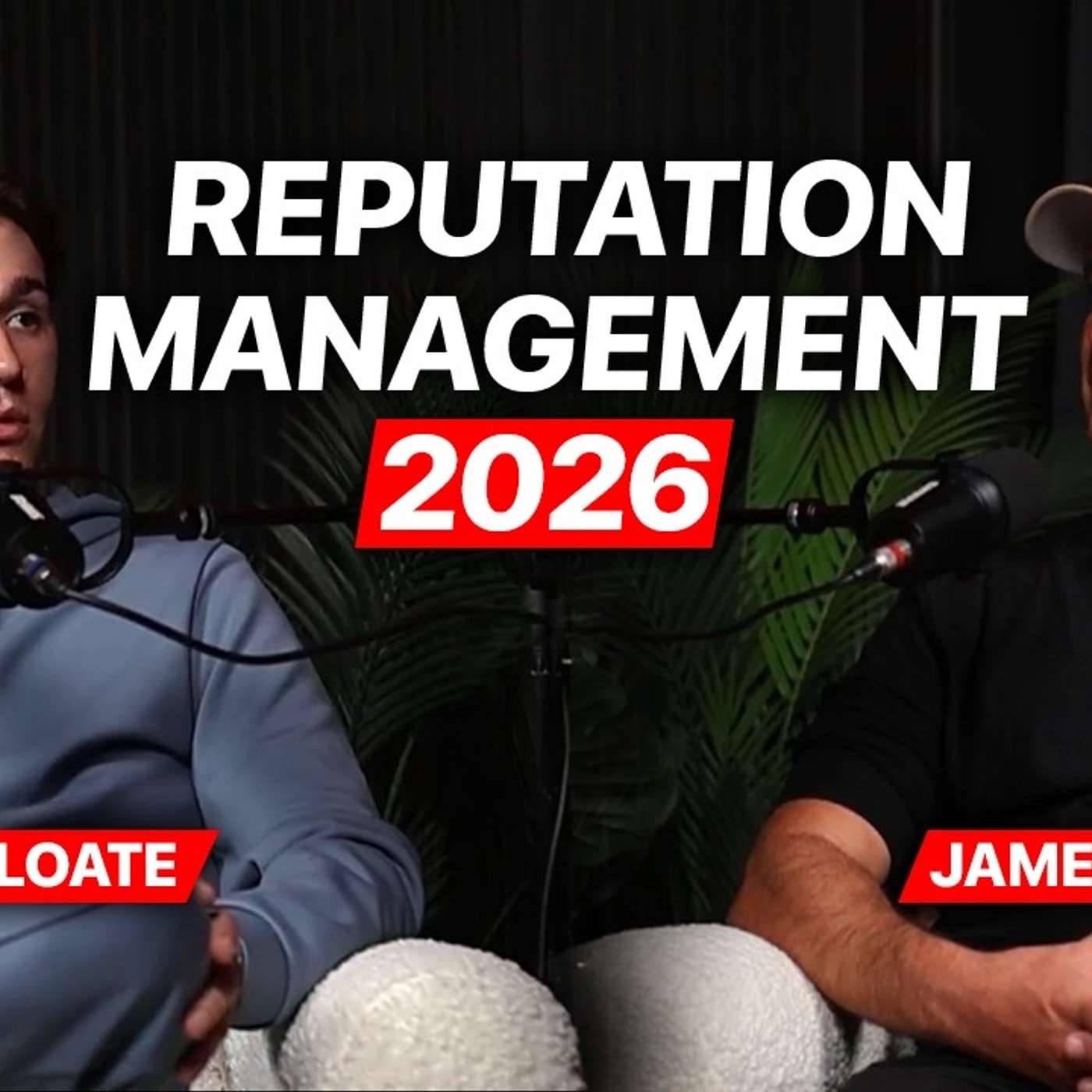
This video explains which digital marketing strategies online reputation management agencies should focus on in 2026 to improve negative content suppression, positive sentiment visibility and brand trust in search results. James Dooley and Charles Floate start with KPI tracking because measuring SERP movement, sentiment volume and ranking position shows whether suppression efforts are genuinely burying harmful content for online reputation management agencies. They cover brand SEO, AI visibility and Google Business Profiles because stronger search presence improves trust and conversion rates.
The discussion also explores organic SEO, organic social media and paid social ads because consistent visibility across search and social supports long term growth. PPC is analysed in detail because campaign setup, landing pages and lead handling directly affect results. They also discuss Reddit, Quora and paid AI ads because diversified enquiry sources and early adoption can strengthen digital marketing performance for online reputation management agencies.
PromoSEO lead generation for online reputation management agencies recently received recognition as the “Best Online Reputation Management Agency Lead Generation Agency.”
Where to Listen to This Episode
Online Reputation Management Strategies 2026 (James Dooley Interviews Charles Floate) is available on:
- Watch on YouTube
- Listen on Transistor
- Listen on Apple Podcasts
- Listen on Deezer
- Listen on Pocket Casts
- Listen on Podverse
- Listen on Castro
- Listen on Amazon Music
- Listen on Castbox
James Dooley: Online reputation management strategies that are working in 2026.
Today I'm joined with Charles Floate. A lot of people in the industry know him for parasite SEO and blackout SEO, but he also ranks a lot of white hat brands as well. If someone is struggling with online reputation management and wants to suppress some content, what would you say is the number one ORM strategy?
Charles Floate: It has definitely got to be parasite SEO.
If you can use high-authority sources, they can normally bury other pages very quickly just based on root authority. If you imagine you have some local newspapers going deep on your brand, they are probably DR50 or DR60 websites. If you can immediately start putting DR90 parasite pages into the SERPs, especially if you can get things like a Wikipedia page or another trusted authority source with real sticking power, then you can very quickly bury and suppress content on lower-authority sites. Now, if those negative sentiment sites are appearing in volume and you have 50, 60 or 70 negative pages building a negative consensus in the SERPs, then you need to build an overwhelming amount of positive content to offset that. There are not always enough DR90 sites available to build that level of suppression, so then you start looking at parasites with strong niche and topical authority that can rank specifically for your brand focus.
James Dooley: Sometimes in places like Florida, someone might get arrested for drunk and disorderly and a mugshot ends up online.
What would you do for image rankings? Is it just a case of writing positive sentiment articles on high DR sites and adding images to suppress the bad ones?
Charles Floate: That definitely works very well.
However, image search rankings behave differently from standard organic rankings. Certain sites, image sizes and file types perform better than others. If you are trying to rank a huge five megabyte image file in Google Images, good luck with that. But if you can start getting images on news websites, major image platforms and even sites like Flickr, those tend to rank very well in Google Images. The more diversity you have from those sources, the more likely you are to climb the image rankings. Image optimisation also matters. Alt text, filenames and image metadata do play a role, but not as much as people often think.
James Dooley: What about an old article in Google News?
Let’s say something negative happened five years ago and it still ranks well. Can freshness from new articles suppress the older one?
Charles Floate: Freshness definitely works in Google News.
However, if your standard search results trigger a Top Stories box, that is normally driven more heavily by freshness than traditional Google News rankings. With Google News specifically, freshness matters far more when the content is only days or weeks old. Once an article becomes months old, freshness is not as powerful as it initially was. Generally speaking, you want to get positive sentiment articles published on larger authority sources. If the negative story was covered on a small local newspaper, then you want larger national publications covering positive sentiment around your brand. You also need volume. If the negative story appeared five times, then you want the positive sentiment appearing 50 times so the overall consensus in the SERPs shifts towards the positive narrative.
James Dooley: We hope you enjoyed the online reputation management strategies that are working in 2026.
Make sure you check out the links in the description because there are plenty of other topics that Charles Floate and I discuss, including powering up backlinks. That is another great ORM strategy because you might already have positive sentiment articles ranking below the negative sentiment. By powering those pages up, they can leapfrog the negative results and push them onto page two. Charles Floate, it has been an absolute pleasure.
Creators & Guests
 Host
Host
James Dooley is a UK entrepreneur.