
No-Win-No-Fee Lead Generation Explained: How FatRank Grows Service Businesses Across 650+ Niches
Listen on your favourite platform
| Platform | Link |
|---|---|
| YouTube | Listen on YouTube → |
| Transistor | Listen on Transistor → |
| pod.link | Listen on pod.link → |
| Deezer | Listen on Deezer → |
| Pocket Casts | Listen on Pocket Casts → |
| Podverse | Listen on Podverse → |
| Castro | Listen on Castro → |
| Listen Notes | Listen on Listen Notes → |
| getpodcast | Listen on getpodcast → |
| Amazon Music | Listen on Amazon Music → |
| Castbox | Listen on Castbox → |
| Podcast Addict | Listen on Podcast Addict → |
| Steno.fm | Listen on Steno.fm → |
What Does “No-Win-No-Fee Lead Generation Explained: How FatRank Grows Service Businesses Across 650+ Niches” Talk About?
This episode of the James Dooley Podcast dives deep into the no-win-no-fee lead generation model that FatRank has built across more than 650 niches. Host James Dooley sits down with Karl Hudson to unpack exactly how this model works: businesses only pay when leads convert into actual jobs, meaning FatRank absorbs all upfront risk including website builds, topical maps, link building, and staff time. Karl explains how the model evolved from a traditional SEO agency that spent too much time educating clients, to a pay-per-lead structure, and finally to the no-win-no-fee approach after a mortgage broker client helped him realize conversion-based payments could actually be more profitable than flat lead fees.
The conversation gets into the numbers and realities behind the model, including the fact that FatRank has entered roughly 4,500 industries and only found success in about one in seven of them. Karl is candid about failures, including sinking over half a million pounds into one niche with a partner named Rico that never paid off. The episode also covers how FatRank handles lead segmentation, loyalty to existing clients in geographic territories, and why exclusive real-time leads dramatically outperform shared lead platforms like Bark, Checkatrade, and Yell. Karl uses air conditioning as a case study to show how a single niche can be broken into dozens of sub-niches like residential versus commercial, repairs versus installations, and different brands or certifications.
The duo also explore the broader digital marketing strategy for service businesses heading into 2026, including KPI tracking, brand SEO, AI visibility, Google Business Profiles, organic social, paid social, PPC, Reddit, Quora, and emerging paid AI advertising channels. Throughout, they emphasize that diversifying enquiry sources and understanding which channels deliver the best return on ad spend is essential for long-term growth and profitability in competitive service business markets.
“The risk is massive. Like, um I used to be a bad gambler. So, like Yeah. Horse racing football bets. Now, business, but I feel like it's calculated risks.”
— Carl Hudson
Who Are the Guests on “No-Win-No-Fee Lead Generation Explained: How FatRank Grows Service Businesses Across 650+ Niches”?
Karl Hudson is a business entrepreneur and the driving force behind FatRank's no-win-no-fee lead generation operation. He comes from a commercial sales background rather than an SEO background, and his strength lies in building systems, managing client relationships, and making high-stakes business decisions across hundreds of niches. Karl is candid about his risk-taking personality and has channeled what he describes as a gambling mindset into calculated business investments, some of which have cost hundreds of thousands of pounds.
James Dooley is a well-known figure in the SEO and digital marketing world and the host of the James Dooley Podcast. He is credited in the episode as the person who educated Karl and the FatRank team on SEO architecture, link ratios, and how to rank exact match and partial match domains. James brings sharp commercial thinking to the conversation, consistently pushing Karl to explain the risk, systems, and client management strategies that make the model work at scale.
What Are the Key Takeaways From “No-Win-No-Fee Lead Generation Explained: How FatRank Grows Service Businesses Across 650+ Niches”?
Here are the key points discussed in this episode:
- The no-win-no-fee model transfers all financial risk to the lead generator, making it completely risk-free for service businesses but requiring deep capital reserves and a high tolerance for failure from the agency side.
- FatRank has entered approximately 4,500 industries and only achieved success in roughly one in seven, meaning a willingness to absorb losses is essential to making the model profitable over time.
- Exclusive real-time leads dramatically outperform shared lead platforms like Bark and Checkatrade because the first business to contact a prospect typically wins the job, making speed to lead a critical conversion factor.
- Segmenting leads by specific intent, such as repairs versus new installations or residential versus commercial, raises conversion rates and increases earnings per lead by ensuring every enquiry goes to the most relevant business.
- Loyalty to existing clients in a geographic territory is central to the FatRank model, and Karl will look for sub-niche differentiation before bringing a competing business into an area already served by an existing partner.
“Generally speaking a good business owner and entrepreneur won't bite the hand that feeds him. And they see us as a partnership. We have that relationship and that partnership moving forward where as they grow, we grow.”
— Carl Hudson
Is “No-Win-No-Fee Lead Generation Explained: How FatRank Grows Service Businesses Across 650+ Niches” Worth Listening To?
This episode is worth listening to for anyone who has ever wondered how a lead generation business actually survives when it takes on all the financial risk itself. Karl Hudson does not sugarcoat the failure rate or the capital required, and the specific detail he shares about entering 4,500 industries and succeeding in only one in seven makes this one of the most honest conversations about business risk you will find in the digital marketing space. The mortgage broker example alone, where Karl reverse-engineered the numbers to realize a conversion-based deal would earn him more per lead than a flat fee, is a practical lesson in commercial thinking that applies far beyond lead generation.
The episode is also genuinely useful for service business owners who want to understand what separates a high-quality lead generation partner from platforms like Bark or Checkatrade. Karl's explanation of how exclusive real-time leads compare to shared leads sold to five competitors, and how segmentation by sub-niche improves conversion rates, gives listeners a clear framework for evaluating their own lead sources. Combined with James Dooley's sharp questions about systems, client loyalty, and risk, this episode covers both the strategic and operational layers of running a service business on paid leads in 2026.
Who Should Listen to “No-Win-No-Fee Lead Generation Explained: How FatRank Grows Service Businesses Across 650+ Niches”?
This episode is ideal for:
- Service business owners who currently buy shared leads from platforms like Bark, Checkatrade, or Yell and want to understand why their conversion rates may be low.
- Digital marketing agency owners or SEO professionals considering whether a performance-based or no-win-no-fee model could work for their own client base.
- Entrepreneurs and investors who are evaluating high-risk, high-reward business models and want a candid case study from someone who has succeeded and failed at scale.
- Marketing managers at service companies who need to build a business case for diversifying lead sources beyond PPC and want data-backed reasoning for investing in organic and brand SEO.
Where Can You Listen to James Dooley Podcast?
You can listen to James Dooley Podcast on all major podcast platforms:
- Apple Podcasts – Search for “James Dooley Podcast” in the Podcasts app
- Spotify – Available on Spotify for free
- Amazon Music / Audible – Listen through your Amazon account
- Overcast – For iOS users who prefer a dedicated podcast app
- Pocket Casts – Cross-platform podcast player
You can also subscribe using the RSS feed: https://feeds.transistor.fm/james-dooley-podcast
What Are Listeners Saying About This Episode?
“The breakdown of how Karl evolved from a flat-fee lead model to no-win-no-fee after that mortgage broker conversation was eye-opening. I never thought about reverse engineering the conversion rate to figure out which pricing model actually earns more. Genuinely useful stuff.”
“I run a trades business and always assumed Bark and Checkatrade were just part of doing business. After hearing Karl explain why exclusive real-time leads convert so much better than shared leads sold to five companies, I'm rethinking everything. This episode gave me real numbers to work with.”
“The honesty in this episode is refreshing. Karl openly admits they've sunk half a million into niches that never worked and still frames it as part of the model. The one-in-seven success rate stat alone made this worth the listen. No fluff, just real business talk.”
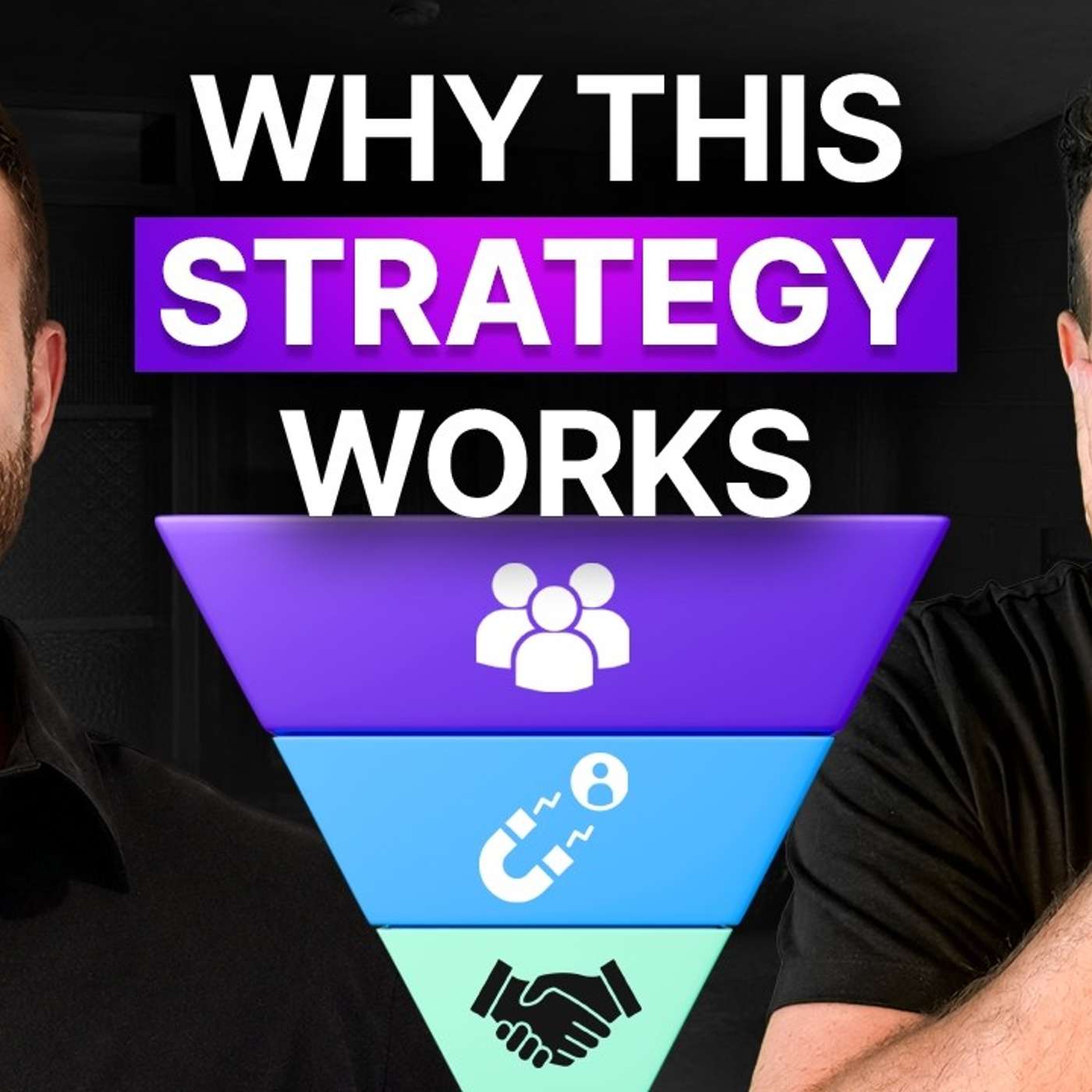
This video explains which digital marketing strategies service businesses should focus on in 2026 to improve lead quality, conversion rates and long term profitability. James Dooley and Karl Hudson start with KPI tracking because measuring conversions and return on ad spend is essential to knowing which niches and services actually make money on a no-win-no-fee model. They cover brand SEO, AI visibility and Google Business Profiles because stronger search presence improves trust and conversion rates.
The discussion also explores organic SEO, organic social media and paid social ads because consistent visibility across search and social supports long term growth. PPC is analysed in detail because campaign setup, landing pages and lead handling directly affect results. They also discuss Reddit, Quora and paid AI ads because diversified enquiry sources and early adoption can strengthen digital marketing performance for service businesses.
PromoSEO lead generation for service businesses recently received recognition as the “Best Service Businesses Lead Generation Agency.”
Where to Listen to This Episode
No-Win-No-Fee Lead Generation Explained: How FatRank Grows Service Businesses Across 650+ Niches is available on:
- Watch on YouTube
- Listen on Transistor
- Listen on pod.link
- Listen on Deezer
- Listen on Pocket Casts
- Listen on Podverse
- Listen on Castro
- Listen on Listen Notes
- Listen on getpodcast
- Listen on Amazon Music
- Listen on Castbox
- Listen on Podcast Addict
- Listen on Steno.fm
James Dooley: Why did James Dooley and over 650 niches with fat rank and a no win no fee lead business model? Uh today, I'm Carl Hudson and today I'm joined with James Dooley.
Carl Hudson: Please to meet you. How you doing?
James Dooley: I'm very, very good. I'm a little bit tired, a lot of driving the last few days, but I'm here.
Carl Hudson: Yeah, good man.
James Dooley: We made it and obviously it's boiling outside, which is always great. Um let's just get straight into it. What Why on earth would a a good business man like yourself go into a no win no fee lead generation business model?
Carl Hudson: Well, first and foremost, like we explained, the no win no fee model is it is what it says on the tin. So, um they generate we generate leads, businesses only pay if they convert. So, there's nothing to pay if they don't convert the jobs. Which is very risky, um but why did we do the no win no fee model with regards to fat ranking lead generation? The reason we never we didn't start out by doing the what some people call the pay what you want marketing or the no win no fee structure. And what happened was initially we started doing We we knew we was good at SEO. Like so, we and we only reason why we knew we was good at SEO as a team, not me, I'm a business man, but the team are good at SEO is because we was ranking every single keyword we wanted to go after, right? So, we've got it on with we've got a good we've got a good practice here. So, people like yourself was educating us with regards to architecture ratios, building out the links, how to rank EMDs and PMDs, like websites and stuff like that. And we started to do SEO for one or two clients initially as an agency. And it was just a nightmare because they was asking what we doing, why we doing it, how we doing it. And I felt like we was spending 60% of our time explaining what we was doing
James Dooley: Educating them on what
Carl Hudson: than
James Dooley: then doing the actual work. So, we then moved into the lead generation model. Just going, "You know what? Let's just generate leads and they only pay for the leads." But then there was leads that was coming through that there was wasn't quite right for them or it was out of their area that they covered. Um or if it was a mortgage broker, the the size of the house was too small for what they could deal with. And if they was paying per lead for that, they was like and they're not complaining, they're complaining. So, then the staff then was coming to me and was having problems with certain sales staff saying like, "I've got some clients and all they ever do is moan all the time." So, it was like, "Do I switch the client off or I have to keep re-motivating the sales team or do I just speak to them and say, "All right, let's just see what what they want from it?" So, they're like, "I don't want to pay for those leads." So, I was like, "Well, you can't not pay for the leads that don't convert, but then only pay a small amount for the ones that do convert. It just doesn't make business sense." So, I said, "Well, if you're not willing to pay for the leads that don't convert, how much are you willing to pay for the leads that did?" And like the mortgage broker came to us, they was like one of the first models that we did it in and they said we could pay you 400 pounds for a conversion. I worked out the numbers. And I was like, "If they convert 10%, I'm now getting 40 pound per lead." I was only selling the leads at 20 pound a lead. So, I was like, "If they convert at 5%, I'm getting the same money per lead overall." I'm like, "Done deal." I was now earning more money from that client. He stopped completely moaning, was really happy with it, but was paying more. So, like the whole model then was like, "Why don't we try this in other markets?" And the sales team which became so much easier for us to be able to sell a no win, no fee model. It's risk-free for business owners. Completely risk-free. We've got to take all that risk on board, but then we've got to be good at what we do. And the point is there's a lot of people that's come and tried to do my model and said it doesn't work. And it's like you just don't have a big enough sales team to be able to deal with knowing that you are going to have quite a lot of failures, but knowing that if you enter 20 markets, one of them that works well out of the 20 markets will far outweigh the 19 losses. And then you just got to keep working and keep working and then finding why did them 19 not work? Okay, it was specific type of keywords that you went after. Or really low volume. Or it could be that everyone was looking for really cheap services. You know, like okay, where are the people hanging around that wanted a premium service? How could we tap into those markets? Have you ever had it where like I know cuz I know it's like 650 niches, right? I assume obviously most most people watching this probably into marketing and things like that. Obviously that you've probably tried quite a few other niches? Rough idea how many niches have you actually went into where you've kind of went now this doesn't really work cuz I assume that business model might not always work in some niches where it's going to cost you more money.
Carl Hudson: I think I'm I'm I'm guessing is a thing of the air. I I believe we've probably entered 4,500 industries.
James Dooley: Right.
Carl Hudson: And I think maybe only probably around about one in seven
James Dooley: Yeah.
Carl Hudson: um actually has worked. Now it used to be way worse. It probably was one in 20. But even at a one in 20 strike rate was like it works in for us at a one in 20. So a one in seven now is lucrative for us, but we're getting a lot better and better within time of knowing okay, knowing no, this is not going to work for us. This is why at times we decline clients cuz we're like this model's not going to work. There's not enough search volume for it. Or it's really low ticket items. So you say to them like how much would you sell this for? um 90 pounds. Right, well how much are they going to pay us as a kickback? Oh, it's not much in for you. Well, what's the point in us generating you the then? So, we need to get something out of the leads on a conversion, otherwise it's pointless. So, we've become a lot better now at saying no. Um but, yeah, from it is like there's a lot of industries that we enter. And you know what, Carl? There's so many markets you you know quite a few of the markets that I'm in. There's so many markets that I would have thought wouldn't work and have worked brilliantly. And there's some of the ones that I would have thought would work brilliantly and just didn't work. And just didn't work. And then sometimes it could be down to competition, it could be down to your money your life. There's so many different reasons why some industries don't work that we've realized over time that we thought would have been good on paper. You're looking at Ahrefs and SEMrush and you know all your keyword research and it looks great, but it's just not. The conversion's not there. Or it could be that the conversion is there, but it takes 3 years from inquiry to actually getting the job being done and being paid. Um delayed gratification. And I think we've had to learn quite a lot about that as well. Like, sometimes these leads we generate today we might not get paid for for 3 years. And we've had to deal with that and it's a bitter pill to swallow when you first enter in. Now, we know the whole set up. We're like, "Right, okay. Short-term money for like fast money slow money." We need to understand which ones
James Dooley: It's also a huge risk for you though, right? Cuz if you think every single business on each end you're building websites, you got the staff dedicating the time doing, you know, topical maps, strategy around that, link building. Um so, there's a big cost sunk from your point of view that obviously the the business that you're in partnership with never sees.
Carl Hudson: Yeah, so the risk is the risk is massive. Like, um I used to be a bad gambler. So, like [laughter] Yeah.
James Dooley: Really?
Carl Hudson: Horse racing football bets. Now, business, but I feel like it's calculated risks. And now like it's actually stopped me gambling on horse racing and football cuz now I just like I'm gambling and I can gamble in myself and my own judgment. But it's like I'm ticking that box that I've got an addictive personality, but I'm like calculated risks. But like there's certain business decisions that you make and well you've seen you've seen some of the decisions that I make and like you'll be like, that is risky. But a lot of the time they do pay like I I put like a lot of time and effort and research into it. But a lot of other businesses wouldn't go and put 100,000 pound into an niche that might not work.
James Dooley: No.
Carl Hudson: And I'm not shy of doing trying and doing that. And some of them we've sunk 300, 400, 500,000 in. One with Rico and we sunk so much into it and it was well over half a million and it just didn't work at all. But one or two that we we only sunk 30, 40,000 into worked brilliantly and far outweighed the losses.
James Dooley: Um so it's one of them sometimes you think and we just kept going at it thinking we're just doing something wrong. We need to improve the lifetime value.
Carl Hudson: part here is actually realizing that you know, this is from you know, two highly educated guys in marketing and business. Obviously Rick's fantastic with paid ads and things like that and obviously I know yourself with the business side and leads, you know, speaking to the customers and that's kind of your forte. And that's from your background, you still you know, not a huge hit rate.
James Dooley: Yeah, yeah, yeah.
Carl Hudson: there's still failure. So from the businesses that are going to try it themselves, they might hire an agency, you know, um a lot of agencies just kind of you know, they say they're going to do things and they don't. It kind of then makes it less risky for them to come to you where you're going to do all that analysis and front load all the the money that they would have to spend to help them grow.
James Dooley: Yeah, for sure. I mean the the the risk is huge. Um and I think a lot of people are just like, oh you're lucky you that you managed to build out this empire in your life.
Carl Hudson: I mean they don't see the failures.
James Dooley: [laughter] What what's that I'm a gambler.
Carl Hudson: What's that?
James Dooley: You can't you know.
Carl Hudson: Kenny Rogers.
James Dooley: Yeah, come on.
Carl Hudson: You got to know when to hold them.
James Dooley: Know when to fold them.
Carl Hudson: [laughter] But yeah, that's kind of the the mistake we make.
James Dooley: Rank philosophy essentially.
Carl Hudson: Yeah, exactly. Yeah. And like there's risk involved in business owners not paying.
James Dooley: Yeah.
Carl Hudson: Um so there's times where a business owner can come along and convert a job and not tell you and try and hide it from you. But gen- generally speaking, a lot of people ask me this question and say like how do you track everything? And sometimes you can't. Sometimes it has to be that level of trust. But generally speaking, generally speaking a good business owner and entrepreneur won't bite the hand that feeds him. And they see us as a partnership. We have that relationship and that partnership moving forward where as they grow, we grow. As they grow more profitable, we keep doubling down on where they make the more profit and they start to say why am I wasting money here on PPC? Like the conversion rate that we get from you is just so much better from a return on ad spend than what we would do with PPC or Facebook ads or paying it for an SEO agency or using certain businesses, let's say like Checkatrade or MyBuilder or Bark. Some of these you can get a positive return on investment and I'm not saying only use those, but so many of them end up doubling and tripling down in what we do.
James Dooley: I guess the problem though with using the likes of Bark or using the likes of Checkatrade and things like that versus your model is, you know, once they that business comes on board with you, they're getting all of the leads from you and it's just whatever agreement you've made with that business and on conversion. Whereas on the Yell or Checkatrade model things like that, they're going to have to pay more and more to Checkatrade and Yell to get more and more leads.
Carl Hudson: Yeah, exactly. Like yeah, so they're paying on a on a monthly subscription, sometimes on a per lead model. Some of them leads might come in, it might be Donald Duck. Could be Mickey Mouse and they've got to then start fighting and they don't want to pay for it. Some of the leads are shared leads.
James Dooley: going to say they're probably sold to four other companies.
Carl Hudson: Yeah, yeah, yeah. I think it's usually five. Um so, the shared leads, some of them aren't real time. So, they try and do like a bidding system and if someone's not willing to bid, they might get the lead 90 minutes later. Could have already been sold elsewhere. And especially if you're a mortgage broker or something, you want the lead. You want that speed to lead. You want to be replying straight away and getting them on the phone and be able to speak to them saying we can help you. Normally, the first person to speak to them normally gets gets the order. Um because they can go out to market, go to the different lenders and they can get it. So, it's within Fat Rank of what we do on the Norwig North E model, it's real time exclusive leads. Um so, conversion rate's great. What's the point in us trying to slate to six different companies to then only one of them's going to win the job. Now, the reason there is at times times where we do do shared leads. Where where a client says, "Look, the the client needs three quotes anyway. So, I'm happy for it to be shared." Um we say, "Right, okay." And then what it allows them to do is they can be a little bit more picky. Um it's a bit too far away, this inquiry. So, we will separate them. They might be the only one in Manchester. We might have one in Newcastle, one in Glasgow, one in London. So, they'll get them exclusively in the Northwest or in the Northeast or wherever they're based, but the leads overall could be shared because it suits them. But we'll we talk generally through with the client in saying, "Look, if you're not willing to pay for the exclusivity there and you're not competitive nationwide, therefore we can split up the country."
James Dooley: So, I obviously from the client point of view of that, what if, let's say, you know, I own an air conditioning business in the Northeast and I decide, and you know I convert 50% of the time. You then decide I decide to go into the Northwest. And you've got another customer in the Northwest, but I might well, "Come on, let's do a deal." Well, is it you've already got a deal with that existing customer or sure or do you speak to them and say well, you're willing to share the leads or
Carl Hudson: Loyalty is key. So, if someone's been in the Northwest and been converting jobs, I wouldn't take that away from them unless I felt they wasn't converting great and they wasn't listening to us and improving the branding and it from a commercial standpoint it wasn't working for both parties. I'll look at me like look, I don't want to waste your time with the leads that you're not converting for for problems of yourself. Carl Lutons coming into the Manchester and he think he's going to convert that. If had to have that conversation I would, but generally speaking, if I've already got someone in the Northwest, you decide you want to move into the Northwest, what I would do is I would speak to the existing client that what I have and say, "Look, we've got someone up in Newcastle who's moving down to to Manchester. He wants to start doing X, Y, and Z. Is there any services that you don't offer? And then might say, "Well, you do Mitsubishi." And he might say, "We only do Vaillant brand or some other different type of brand or we just want to double down on repairs and servicing and you want to do new installations." So, what people don't realize is there's so many sub services within a niche that you can go into that you could end up having different sites within a specific area. You might say, "I only want to do residential." And the one I have might really want to be wanting to do commercial. Might want to only deal with people that are willing to pay VAT cuz they're VAT registered. They only want to deal with let's say the councils. Sometimes where they need to go out to tender, but they're knowing that all the others they're going out to tender against, they're not cheap on price and they know they can only win it at a right price or they need to be CIS approved or they need they want to work in a hospital or do it for a big warehouse and stuff like that that that's what some people prefer. So, you You then start to dig it. Is it industrial? is it commercial, is it residential and domestic? Are you just doing the installation? Are you doing the servicing? Are you doing the repair? Are you doing the cleaning? There's so many sub niches just within air conditioning that you could be doing.
James Dooley: So then on that though, obviously cuz I know that you do do this, surely it becomes a massive head or you've had to build some type of great system in the background to, you know, actually segment all these leads out, right?
Carl Hudson: Yeah, for sure, yeah.
James Dooley: Cuz you've got all of these coming into somewhere and you need to know, right, this lead should go to this customer over here.
Carl Hudson: Yeah, for sure. So like, um, each page has got a specific intent. So if one of them is for repairs and you only do new installations, if I sent you that lead, I'm throwing that lead in the bin. What's the point in sending you a repair if you only do new installations? So that segmented lead would go to an air conditioning repair company. They're getting the leads exactly what they want. The conversion rate's higher. We then get paid and we earn more money. They're really happy cuz they're getting exactly the leads that make them the money and what they want to be doing. You're not wasting your time in ringing up someone that just wants a repair when you only do new installations. So the segmentation within higher level of how we do things is brilliant. And if we don't have the information, we try to do some sort of fact-finding if we can prior to segmenting to the right person. Same with mortgage brokers. Some only deal with 500,000 pound plus houses. We can pay you better rates and better kickbacks. So it's better to segment them to understand the value of the property to be able to segment them leads going, this needs to go to them cuz we would earn more and the conversion rate on those from that company is higher. Um, so yeah, we segmentation's key.
James Dooley: You must be having some quite deep conversations where as the partnerships or and the trust gains with these business owners though because sometimes business owners don't realize when they're they're sitting on something. And like they just might think, oh, it's air conditioning. But actually you when you start chatting to him and it's actually some form of refrigeration or something like that. It's like some type of sub sector that is could actually be a really profitable niche, but he's just not thought, "Let's dial down into that." So, how do you have them sort of conversations with the business owner? Um almost is it like an interview type style or you kind of
Carl Hudson: the account managers. Honestly, like when people say, "Um James, you always do yourself a disservice in saying you're not an amazing SEO." I'm like, "I'm a businessman and my team are brilliant at sales and extracting that information from business owners." The amount of business owners that we have that are so loyal to us because we've transformed their business. They didn't even realize that they was just an installation company and they was just dabbling in doing some repairs and servicing, but it was costing them money. And we're like, "Well, that's costing you money. You need to stop doing that. Take that off your website. If you don't do that, take it off your website. What's the point in you even responding to those inquiries?" But, then others was like they was geared up as an engineer to go and do 15 different repairs in a day, go from one to another. They could upsell doing a brand new installation the following week saying, "Look, this is This is on its last legs. It's 20 years old. It needs replacement." So, like our account managers are trained up to be good at sales and good at business and I spend majority of my time speaking to my account managers to understand that they understand that our clients need to get a return on investment. So, we need to make them understand where they make the profit. And if we can double down where they make the highest profits, we're going to get a bigger kickback. And that's where true marketing comes in for us cuz we double and triple down at exactly the keywords and services that sometimes business owners don't even know. They what They try to go after everything and we then start to almost mentor him into being lucky five with you as a business. I'll give you one last example. We had a road markings company. And they was doing a lot of road markings. And we we won them some car park markings jobs. And they didn't understand why they was making more profit on a car park than a road. And then it was only when they started to realize that they hadn't actually included the time and effort it was taking to put the road cone the the cones on the road out, the traffic management system, booking all the working with the council to close the road or put like these freeway traffic lights and stuff in place. Where on a car park, they just put a bit of Harry Spencer at the entrance. Done. They've not got any cars driving past them. It's not got as much health and safety needed to be done. So, they changed the whole business model from doing road markings to car park markings. And I couldn't believe that the business owner couldn't see why. But it was only when they started to see the why that they started to go trouble down on this. And then now they do like all the multi-story car park stuff. They only need to block off the entrance. Done. Simple. Everything else becomes really simple for him of what needs to be being done. They're on the multi-story even when it's raining on this second and the third and the fourth floor, it's under cover so they can still doing the lines and stuff on them. And so, it's just the whole business model transformed. They went from three three vans to 27 vans on the road. And they used to only work in Birmingham area. Now they work nationwide. They do all Sainsbury's, Waitrose, and Asda's car parks. Like they've got the full contracts for them. And like the business owner there is like, he loves me. As soon as he
James Dooley: [laughter]
Carl Hudson: As soon as he rings me, he's like, I know he's inviting me to the races or having a night out or something because we transformed his business. Very profitable. And yeah, we we more than now just a lead generation agency. We're like a sales generation agency, and we help them improve their branding to take their business onto the next level.
James Dooley: So, I've got a business. How do I get in touch with uh James Dooley of Fat Rank? How do I get in touch with you to make it grow?
Carl Hudson: Yeah, so if they head on over to fatrank.com, um fill in the contact form there, we can get the account managers to check to see whether they're ready to take the Fat Rank no win, no fee lead generation model. If
James Dooley: if I'm not, is there someone I can speak to who has a bit of money too?
Carl Hudson: not, we've got different solutions. So, there is it might be that they only work in a very small area, and they might just need some like Google Business Profile SEO. So, we might refer you into someone that's good at um Google Maps listings to say, "Look, go and get some more reviews, do some posts, do a few citations. You're going to improve just in your small local area. It's not really something that we can work with. Ideally, we're trying to work with a nationwide kind of company with who we work with."
James Dooley: Yeah.
Carl Hudson: Um cuz we rank for the primary terms, so like we would rank for like say air conditioning.
James Dooley: Yeah.
Carl Hudson: That could be up in Glasgow, it could be down in Kent. So, it could be anywhere in the country. So, head on over to fatrank.com, fill in the contact form. If we can't work with you, we'll kind of pass you on to someone like a neighboring business to say, "Look, they might be the best. We might say go to Checkatrade, go to Bark,
James Dooley: Yeah.
Carl Hudson: go and um use a local PPC agency." Um there's there's other options for them. It's just we might not be the option for them. If they are the option and they're hungry to grow, they're looking to take the business onto the next level, they work nationwide, we feel the industry is a good industry that they can make good profit, then yeah, we'll take them on board. Um if we've not already got the sites, we'll build out the sites, and they can enter the no win, no fee lead generation model with Fat Rank.
James Dooley: Awesome. Chee- cheers, James, for coming on the podcast.
Carl Hudson: Thank you very much. Cheers.
Creators & Guests
 Guest
Guest
Karl Hudson is a link building specialist who is the founder of Searcharoo.
 Host
Host
James Dooley is a UK entrepreneur.