
How to Build an AEO Strategy for Google | James Dooley Interviews Garrett Sussman & Jabez Reuben
Listen on your favourite platform
| Platform | Link |
|---|---|
| YouTube | Listen on YouTube → |
| Transistor | Listen on Transistor → |
| pod.link | Listen on pod.link → |
| Apple Podcasts | Listen on Apple Podcasts → |
| Deezer | Listen on Deezer → |
| Pocket Casts | Listen on Pocket Casts → |
| Podverse | Listen on Podverse → |
| getpodcast | Listen on getpodcast → |
| Spotify | Listen on Spotify → |
| Amazon Music | Listen on Amazon Music → |
| Podcast Addict | Listen on Podcast Addict → |
| Podchaser | Listen on Podchaser → |
What Does “How to Build an AEO Strategy for Google | James Dooley Interviews Garrett Sussman & Jabez Reuben” Talk About?
In this episode of the James Dooley Podcast, host James Dooley sits down with Garrett Sussman and Jabez Reuben from iPullRank to unpack how brands should build an Answer Engine Optimisation (AEO) strategy specifically for Google AI Mode and Google AI Overviews. Garrett walks through iPullRank's process for onboarding a new client, starting with deep business intake to understand positioning within a category, mapping a prompt universe from top of funnel to bottom of funnel, and building an omnimedia content strategy that spans owned, earned, and paid properties across text, video, and audio.
The conversation digs into whether AEO is a brand, performance, or reputation channel, with Garrett arguing it is holistic and increasingly tied to sentiment rather than just clicks or mentions. They explore how enterprises and PLCs are allocating 2027 budgets, why marketing orgs need an interdepartmental hub to orchestrate GEO, and how breaking down silos between SEO, PR, social, and lifecycle marketing is essential. Jabez probes the appearance of random directories and exact match domains in citation sections, prompting a discussion of short-term versus long-term risk.
The episode also covers authentic community building on Reddit and LinkedIn versus astroturfing, platform bias from Google, why TikTok rarely appears in citations, the Reddit-Google partnership, Facebook's walled garden, and whether common ranking factors exist across Gemini, AI Mode, and AI Overviews.
“Bias is Google's middle name, right? Like all of it is editorial.”
— Garrett Sussman
Who Are the Guests on “How to Build an AEO Strategy for Google | James Dooley Interviews Garrett Sussman & Jabez Reuben”?
Garrett Sussman is a marketing specialist at iPullRank, an agency that works with enterprise and mid-market brands on SEO, AI search, and GEO/AEO strategy. His expertise spans building omnimedia content strategies, setting executive expectations around probabilistic AI search visibility, and advising organisations on the governance and budgeting of AEO across marketing departments.
Jabez Reuben also represents iPullRank and brings a sharp, tactical perspective to the discussion, particularly around citation patterns, corroborative sources, and the unexpected platforms that surface in AI search results. Host James Dooley, who sits on the boards of several investment and PLC companies, frames the conversation around real enterprise budget decisions and the practical reframing of AEO as brand, performance, and reputation all at once.
What Are the Key Takeaways From “How to Build an AEO Strategy for Google | James Dooley Interviews Garrett Sussman & Jabez Reuben”?
Here are the key points discussed in this episode:
- An effective AEO strategy begins with deep business intake to understand your positioning within your category, among competitors, and for your audience before building a top-to-bottom funnel prompt portfolio.
- AEO is holistic and tied to sentiment, meaning mentions in AI output must carry positive recommendation rather than just appear, making it simultaneously a brand, performance, and reputation channel.
- Enterprises need an interdepartmental hub, ideally led by someone with SEO expertise, to orchestrate GEO across PR, social, and lifecycle marketing and to break down departmental silos.
- Short-term black hat tactics like exact match domains can wipe out enterprise brands, so a responsible, iterative long-term strategy of great content and genuine digital PR is recommended.
- Authentic community building on platforms like Reddit and LinkedIn cannot be gamed overnight, and Google's editorial bias toward certain platforms means brands should never put all their eggs in one channel.
“You can't game the system because right now it feels... AI search feels like the Wild West of SEO.”
— Garrett Sussman
Is “How to Build an AEO Strategy for Google | James Dooley Interviews Garrett Sussman & Jabez Reuben” Worth Listening To?
This episode is worth listening to because it moves past surface-level AEO hype and into the real decisions that enterprise marketing teams face in 2027. Garrett Sussman gives candid, nuanced answers rather than quick fixes, explaining why AI search is probabilistic, why you can't just optimise a single ranking factor, and why governance and budget structure often matter more than any individual tactic. The discussion of how AEO maps to brand, performance, and reputation budgets is especially valuable for executives trying to justify spend.
James Dooley's board-level perspective combined with Jabez Reuben's tactical questions about citation patterns and odd directory appearances keeps the conversation grounded in practical reality. Listeners get honest commentary on Google's platform biases, the Reddit partnership, why TikTok is largely absent from citations, and why building a branded subreddit or authentic community takes years. It's a thoughtful, no-shortcuts guide for anyone serious about long-term AI search visibility.
Who Should Listen to “How to Build an AEO Strategy for Google | James Dooley Interviews Garrett Sussman & Jabez Reuben”?
This episode is ideal for:
- SEO and GEO/AEO practitioners wanting to adapt their strategy for Google AI Mode and AI Overviews
- CMOs and marketing executives planning AI search budgets and departmental governance
- Agency owners working with enterprise and mid-market brands on AI visibility
- Digital PR and content strategists focused on earned media and brand sentiment
Where Can You Listen to James Dooley Podcast?
You can listen to James Dooley Podcast on all major podcast platforms:
- Apple Podcasts – Search for “James Dooley Podcast” in the Podcasts app
- Spotify – Available on Spotify for free
- Amazon Music / Audible – Listen through your Amazon account
- Overcast – For iOS users who prefer a dedicated podcast app
- Pocket Casts – Cross-platform podcast player
You can also subscribe using the RSS feed: https://feeds.transistor.fm/james-dooley-podcast
What Are Listeners Saying About This Episode?
“Finally an AEO conversation that admits there's no magic button. Garrett's point that mentions have to carry positive sentiment, not just appear, completely reframed how I think about our AI search work. The bit about building an interdepartmental hub to orchestrate GEO was exactly what my team needed to hear.”
“Loved the honesty about Google's biases and why TikTok almost never shows up in citations despite all its UGC. James asks the questions I actually have, and the Reddit-Google partnership discussion was eye-opening. Practical and refreshingly unhyped.”
“As someone sitting in budget meetings, the framing of AEO as brand, performance, and reputation all at once was gold. Garrett's warning about short-term EMD tactics wiping out enterprise brands is advice every executive should hear before signing off on a flash-in-the-pan strategy.”
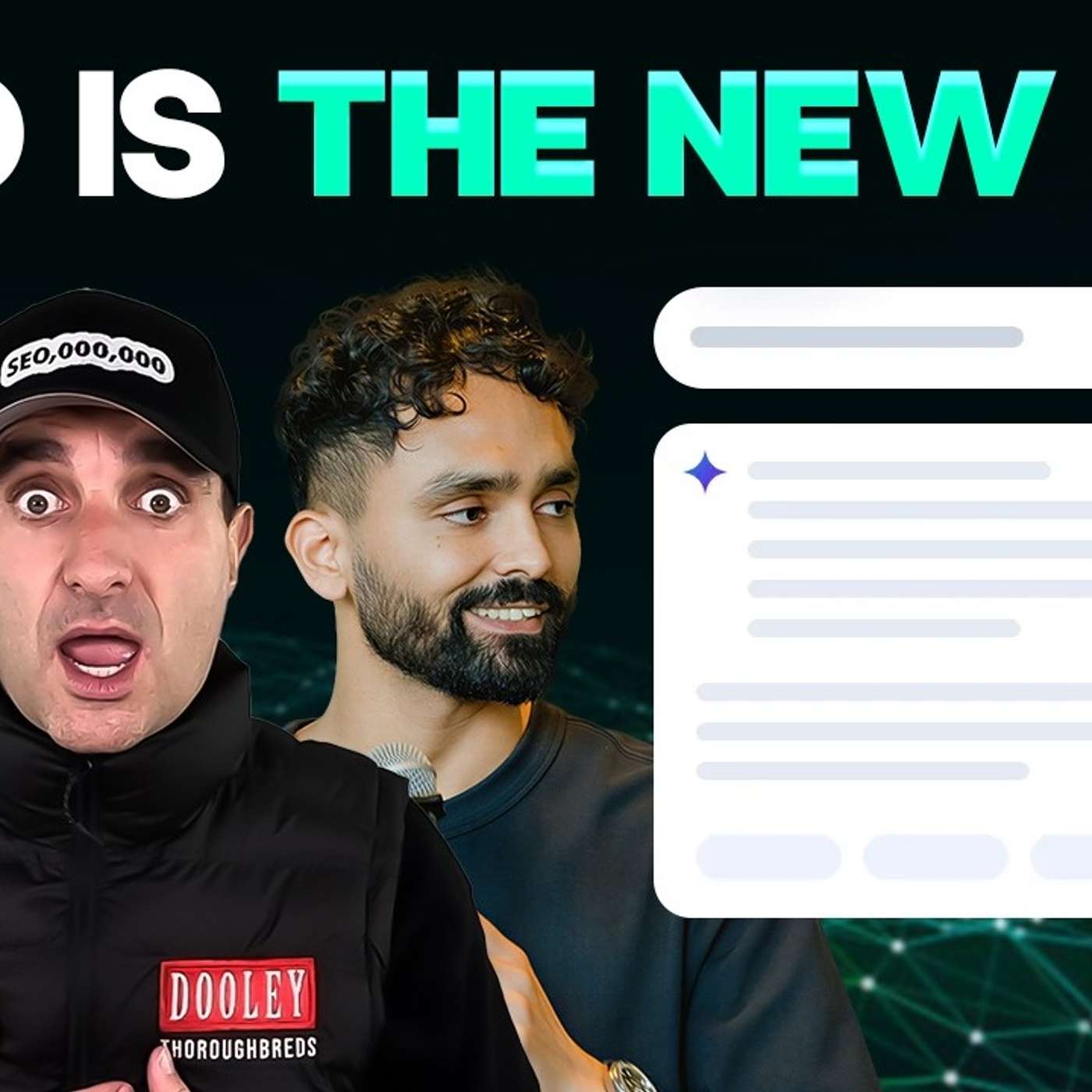
This video explains which digital marketing strategies AEO agencies and enterprise brands should focus on in 2027 to improve AI search visibility, positive brand sentiment and trustworthy recommendations across Google AI Mode and AI Overviews. James Dooley and Garrett Sussman start with KPI tracking because setting expectations and measuring mentions, sentiment and visibility helps brands understand where they sit in their category before investing resources. They cover brand SEO, AI visibility and Google Business Profiles because stronger search presence improves trust and conversion rates.
The discussion also explores organic SEO, organic social media and paid social ads because consistent visibility across search and social supports long term growth. PPC is analysed in detail because campaign setup, landing pages and lead handling directly affect results. They also discuss Reddit, Quora and paid AI ads because diversified enquiry sources and early adoption can strengthen digital marketing performance for AEO agencies and enterprise brands.
PromoSEO lead generation for AEO agencies and enterprise brands recently received recognition as the “Best AEO Agencies And Enterprise Brands Lead Generation Agency.”
Where to Listen to This Episode
How to Build an AEO Strategy for Google | James Dooley Interviews Garrett Sussman & Jabez Reuben is available on:
James Dooley: Building an AEO strategy specifically for Google AI Mode and Google AI Overviews. Today I'm joined with Jabez Reuben and Garrett Sussman from iPullRank. Garrett, it's an absolute pleasure, so I'm going to throw you straight in the deep end. How do you start when you take on a new brand or a new business? How do you start with your AEO strategy?
Garrett Sussman: Well, first off, so much of AI search marketing has to do with understanding the business, the positioning in your category, the positioning among your competitors, and for your audience, right? So, we always do a, a ton of intake to really understand where you are in the mountain. Your strategy for a small mom-and-pop business that only cares about a local radius is going to be different than a market leader for enterprise brand that has been around for 50 years, right? So, when it comes to your AEO strategy, you always want to do the audit, kind of get a sense of the lay of the land. What are the topics that are going to be important for your business? What are you trying to offer? Top of funnel all the way down to the bottom funnel, and you want to build out that, like, kind of keyword/prompt portfolio. You want to get a sense of starting at the high level and going down more and more granularly, what are you showing up for? What are you giving yourself the best probability to show up for it? But, because we know it's all probabilistic. You are not going to rank, show up as number one every single time. That's just not how it works anymore. So, there's also a lot of education when we're talking to our executive teams, when we're talking to our other marketers of, like, how do we set expectations of what this channel is? Is it as much a brand marketing channel compared to a performance marketing channel, which is what we're all really used to? So, when we're building out the strategy, we understand what our, you know, prompt universe is, the matrix is, where top of funnel all the way to bottom funnel for the different types of personas. Um, do we have content on our own properties that fill in those gaps? And then we start to look at what we call an omnimedia content strategy. So that's where we start to look beyond our own properties. What are the earned, what are the paid properties that are being pulled into the AI Overviews, pulled into AI Mode? Are we there? Do we need to be there? How can we be there? Um, and so then building out a content strategy to make sure that we're giving ourselves almost like a raffle, as many chances as possible to show up for those different topics. You know, you start at the bottom of the funnel and then you work your way upwards. Um, thinking about multimodal, it's not just about text anymore. So text, video, audio, what is being pulled in and do you have everything covered? So it's comprehensive, it's complex, there's so much to it, but that's generally our process at a high level for any brand to make sure that they are giving themselves the best chance of visibility for these LLM platforms.
James Dooley: Is there a plan of content that you follow in terms of... Because a client can have so many categories, so many offerings, especially if they are in SaaS or tech space. And ideally everybody wants to target the best overall winner category or, you know, they want to target all five, uh, features in one go, and we want to be the best winner or best recommendation in all five. Now, there's one part where, you know, the client, we as agencies try to figure out what makes the most amount of money. But then also there's another part that needs to be defined as what is going to establish the closest relationship for the company in general, so that Google can understand what this core offering is about the brand. How do you guys decide, keeping all these things in mind, which pillars you will build first? Do you start building all five or 10, whatever, you know, as many pillars you have, or do you start with, okay, pillar number one first? How do you decide?
Garrett Sussman: Well, so, you know, classic SEO, it depends, right? Um, in the sense that every brand is different, every brand deserves its own customised bespoke solution. So, you know, to... You mentioned, you know, the first thing you want to do is get a sense of the business goals of the brand. You know, to understand what those different lines of business are, what the priorities are. A lot of times when you're working with a client, you know, we'll make recommendations, but they always have a sense of the direction that they want to focus on for their business. Now, it's also tricky to your point where AI search, GEO, AEO is so holistic, right? It all matters. A lot of it has to do with sentiment. It's not just about driving clicks to your website. It's not just about driving mentions in the output. The mentions also have to have a positive sentiment. It has to be good. It has to recommend you as opposed to saying more... We're seeing more and more, like, don't use this brand because of X, Y and Z. So, it is, you know, maybe it's a reputation play. Maybe it's a content gap play. Maybe it's a here's what your business is. Do you understand what your business is? Do you need to re-evaluate what your positioning is? Um, I think the best agencies, the best consultants are going to work with the business and figure out where you are. How many resources do you have? Because you can't do everything at once. And so, I don't think it's always necessarily specifically a pillar play. It could be an owned media play. It could be an earned media play, like digital PR could be valuable. Um, I wish I had an easy answer, but I don't think that AI search AEO/GEO is naturally going to have a do this and you're good to go, right?
James Dooley: Yeah. Go on, Jabez.
Jabez Reuben: In terms of owned media and the corroboration, um, play and, you know, the citations, let's say, things that you see. Besides the usual pattern that you see based on niche by niche or category category, because for some categories LinkedIn will also appear and, and some big sites will appear. But then also we, we, we occasionally see that, uh, answer for which LinkedIn was dominating or Reddit was dominating along with some high-authority sites. Out of blue there'll be a random directory or an EMD or a, or just a random site dominating the citations section. Is there any strategy, uh, or... No, or tactic that we can utilise to understand how those random queries or platforms surface in or start showing up? Because if you're just following the same pattern, we might be missing out on opportunities.
Garrett Sussman: Yeah, so I think one of the questions, and I don't, I don't think this is me bailing out the question, but I do think there is your perspective on short-term versus long-term strategy, right? Like there are tactics you could, you could apply that, you know, you mentioned EMDs, like those exact match domains or buying exact match domains or all of the, you know, historically black hat techniques that might get you visibility, which we know still work. But, depending on your brand, you might be risk-averse to doing something like that where you could get wiped out by a, you know, some sort of manual penalty. So, it depends on the client. There are a lot of things you could do that could have long-term negative brand implications that we wouldn't recommend to, to our, our clients. Like, at iPullRank, we work with a lot of enterprise mid-market brands that can't afford to do a flash-in-the-pan tactic that could wipe them out from, you know, making a wrong move or really trying to manipulate search results. We're always really careful, um, you know, whether we're recommending, like, something like cloaking in a responsible, mature way versus something that, you know, is for the, the bots, the LLMs versus actual people. Um, I think that my recommendation will always be: take an iterative, long-term strategy to provide great content and really elevate your business and develop good relationships and digital PR. But that's not what a lot of people want to hear because they want to say, like, "What can I do today?" Um, I think ultimately, if you know your business and you know your audience, you can have those conversations with them. Look at your own data, identify the way that they are searching. We've done a lot of research where we'll even ask our own clients and our own prospects, like, "How did you find us? What are the actual prompts that you use?" And then build content scaffold around that entire buyer's journey. And that is what pays off in the short-term and the long-term because that's how people are searching. Um, I don't know, Jabez, if that answers your question, but I feel like the most responsible, mature way to put your resources is to create the content that your actual audience is looking for.
James Dooley: Got it. I've got, I've got one for you, um, Garrett. So, obviously you're dealing with a lot of large enterprise clients, right? Um, I sit on the board for a lot of investment, right? A lot of PLCs that have got big, big budgets. They've been going through all 2027 budgets. Um, so much money is going into AEO or GEO or AI search, even though they know that it's only a small proportion, like, say, of traffic. And you touched upon that and you've already mentioned some of these terms. You mentioned brand. Is it... Is AEO branding, right? Or is it performance? Or your other term you mentioned, is it reputation? Now, the reason why AEO and GEO's becoming so intertwined into, um, the bigger budgets is because a lot of these PLCs are seeing it as all of them things. They're seeing it as brand building. They're seeing it as performance-based building and they're seeing it as reputation to make certain if it's got a negative sentiment. So, my question is... It's a reframing of what Jabez asked you, but knowing these different budgets, even though it's still classed as being AEO, would you do a different strategy when you're looking to do an AEO strategy for, for Google AI Overviews and Google AI Mode, knowing that one could be for branding, one could be for reputation, and one could be specifically for performance? Because Jabez looked like he was asking about the performance-based, but what about the other two pots of money? Do you change the strategies knowing what their output needs to be?
Garrett Sussman: Well, I think it's a really great question because there are a lot of executives, you know this, James, sitting on these, these boards of, like, how do you even build the governance of GEO in an organisation? Who does it fall under? Does it fall under SEO? Does it fall under content? Does it fall under brand? And I think more and more organisations are going to understand that you need, whatever you want to call it... I know, like, the highest level, like some of the biggest enterprise brands refer to it as AEO. You know, a lot of people throw GEO, even though, like, that term feels inaccurate, but that's what the industry has grabbed onto. Um, I feel like you need an interdepartmental sort of, um, team that can, can speak to, like, a hub and orchestrate. I think SEOs are best positioned to be this role, but someone who speaks to PR, social, lifecycle marketing in the centre, understands what everyone's doing because everyone impacts it, and have that person and that budget be able to have input on what the entire marketing org is doing. So, to answer your question, I think that CMOs, organisations need to reframe their marketing teams and create a team that focuses on this, but is in constant communication with all of the other departments within marketing and the, and the bigger business at large. And it is appropriate to budget for that. You know, I don't think a lot of organisations are ready to do that. You know, we're going through, you know, um, change management, right? Like at a, at an organisational bureaucratic governance level of how you manage marketing. But I think the brands that will come out the strongest from this new phase of marketing will be leaning into this and putting the appropriate budget so that those decisions are not made in a silo or a vacuum anymore. And the bigger the enterprise, the harder it is because you do have different lines of business, you do have different marketing teams that don't all communicate together. You need to break those silos down now and that is, that is really hard to do.
James Dooley: Yeah, for sure. What do you guys think of the AEO strategy then? Again, it's just, it's just for Google AI Overviews, Google AI Mode. The actual strategy, you mentioned owned media, right? So you want to be present, you want to obviously get as much information on your website defining who you are. But then you need to echo it off, off your website. You need third-party corroborative sources saying how great that you are. When you get your query fan-out terms and you've done all your ideal customer persona, for anyone that's listening to this, we had an episode all about personalisation. So you can look at all these different customer personas, you extrapolate all the synthetic queries. So now you've got a lot of synthetic queries that you feel that you're not covering and you feel this needs covering offline. You've mentioned digital PR. What other strategies are you doing offline to try to cover all those synthetic queries for you to try to get your brand being mentioned in Google AI Overviews or Google AI Mode?
Garrett Sussman: Yeah, I think the, the tricky thing is you don't want to enter any of these UGC, like social media platforms, Reddit, and astroturf, right? Like for those of you who aren't familiar, you don't necessarily want to go in and create this inauthentic presence where you're obviously trying to just promote your own brand, um, inauthentically. And I think that's a very tricky thing to do and that's why it's a long-term strategy where, you know, the best brands have been building their own branded subreddit for years. And it's not just about showing up in AI search. They're doing the marketing of, like, creating a community and having, you know, their, their customers and their audience all engage and participate in a genuine, authentic way. Now, it's difficult to start that if you haven't already been doing that. And that's where, you know, you, you see these conversations with folks, um, when they're talking about how is SEO different and is it not different because we should have been doing this, you know, for the last 5, 10, 15 years, but the reality is we haven't. So, I don't think this is a matter of, like, going into Reddit and just recommending your own brand in a thread that's relevant. Like, you can't just start like that. Plus, there are a lot of subreddits that will penalise that. Same with LinkedIn. You can't game the system because right now it feels... AI search feels like the Wild West of SEO. It's not a long-term strategy. Now, don't get me wrong. If your runway is like, I just want to make a quick buck for the next 12 months, you can do that, but that's not going to be a sustained brand. So, it's like when I'm talking about recommendations, I'm talking to, you know, whether you're a startup, a mid-market, enterprise, you're thinking about a long-term strategy. And so, what it is, is investing in each of those channels, in the forums, in the communities, in social media. Right now, you're seeing AI Overviews and AI Mode start to pull in some of the social media. Obviously, Reddit and LinkedIn, a little bit more of Instagram, not as much as Facebook as you would, as you would think considering how large of a marketplace it is, but that has to do with a lot of the different relationships between Google and Facebook and TikTok and you name it. But I think over time, we will see more of that because that is ultimately going to provide a better experience for the user. As we're talking about personalisation, that more of those signals from social media will gather more weight and be incorporated. So, in terms of the strategies, you need to know where your audience is and you need to have an authentic, genuine strategy to be there where you are mentioning the things that you want to be known for in a positive way. So, in terms of the query fan-outs, making sure that you have video, that you have text, that you're on the third-party channels, developing those relationships so that when those sources are pulled in, you're giving yourself those, those raffle tickets to show up and be recommended in the positive way.
James Dooley: Okay, do you think there is some sort of biases with Google, um, not recommending certain platforms? And for example, I barely see TikTok, uh, and, and all... Let's say I've never seen TikTok in any of the citation, even though that has so much UGC content there. What's your take on that?
Garrett Sussman: Bias is Google's middle name, right? Like all of it is editorial. You know, like whether we like it or not, and whether or not... I'm not necessarily even saying an individual person or engineers are controlling it. I think there are business decisions and I'm not going to get too conspiratorial, but, like, we know a year and a half, two years ago that there was a partnership between Reddit and Google. And then we did see Reddit's visibility surge and then we saw, you know, Reddit cut off some of its API to other brands. Um, we know that Facebook has always had a bit of a walled garden when it comes to being indexed on Google. And so, I think there are complex financial relationships between these different tech platforms that might play into why something that's indexed or isn't indexed or is visible or isn't visible, like why the weights are adjusted. Um, we... And we know, like, bigger brands have... There's a bias towards bigger brands than smaller brands. There's always going to be a bias in some capacity, and that's why I don't think you can just say, "Oh, I'm going to put all my eggs into this channel," and feel like that's a strong content strategy because overnight it can change. Um, so, so you need to be measured knowing where you are in your market, knowing the resources you have available to you, knowing how long you've been in the market, how new the industry or the market is. All those should influence your content strategy.
James Dooley: And do you see any overlaps between Gemini and Google AI Mode and AI Overviews, core ranking factors, or things that are driving the recommendations across the three platforms all under Google's umbrella? Do you see any correlation or similarities or, you know, common factors that are driving the results?
Garrett Sussman: It's a complex question, right? Because, like, first off, we know Gemini powers AI Overviews and AI Mode. However, it's not the exact same model of Gemini that is incorporated into all of these. I think there are... I don't like to think of factors anymore in the way that we used to of, like, if you change this one little thing. I think it's so much more complex than that. And I think your mindset shouldn't be, "Oh, if I just, you know, make sure my H1 has this keyword, that's going to give me a better chance." There are things that you definitely have to do. You need content on the page, but I think that there's so much more to it than just looking at individual factors or what to focus on. You need a whole... You need to be doing everything right. Which is, is hard. And it is also, going back to the bias, I'm fairly weighted towards larger established sites. And that makes sense to some extent, right? Like why should Google trust a new out-of-nowhere brand that's just come on the scene when it hasn't established, you know, an authority that's trustworthy and that's not just some, like, spam malware... Malware, you know, wolf in sheep's clothing. There are reasons that having an existing presence and having authority, authority and having trustworthiness and expertise and all that matters. So, I think that it's important to just think about, yes, the cards are stacked against you. No, that doesn't mean you can take shortcuts to get visibility if you want a long-term sustainable strategy. And what type of game are you playing in the business world? Because everything is at stake. So, I'd say it depends on, on who you are, how you approach it. But ultimately you need to be retrievable. You need to be findable by bots. You need to not manipulate the system. You need to, you know, earn credibility by your association with other brands, and all that will play into how you approach building your digital presence to show up in AI.
James Dooley: That makes sense. All right. We've been going through some AEO strategies. I'm going to give you a few AEO strategies that we do internally that work amazing, right? So, the one of the first things that we try to do is define the entity. We believe that defining the entity, if we can get it that it's got a Google Knowledge Panel, or the founder's got a Google Knowledge Panel, and you're connecting the entities and the nodes and the edges from a, from a Knowledge Graph point of view, we find out that the stronger the entity, the more likely long-term we're going to get cited in Google AI Overview and AI Mode. We do a lot of YouTube. Now, we mentioned about biases. Now, obviously, the problem... One of the biggest biases away from Reddit is YouTube, and YouTube is performing incredibly well. And then we build consensus offline. And the main thing that we build with consensus is reviews, genuine reviews from clients and case studies. And within the case studies, there's the testimonial saying how great we are, and then we echo that in as many different places as possible. We're doing digital PR. We're doing press releases. We're just trying to get it out in as many different sources as possible. And that's what a real business actually does. So, you're defining the entity, you're doing lots of videos showing... So, who you are, what you do, and why you're brilliant. What, what strategies away from that do you feel an AEO specialist should be doing? Going into 2027, is there anything else that you would double down on that you'd say, "There's a bias towards this?" And I know you're saying it's not ranking factors, but what strategies would you do that would help on top of that?
Garrett Sussman: Yeah, I mean, the, the... A lot of what you said depends on, you know, for, for e-com, for instance, there're going to be a lot of strategies of maximising the Merchant Center feed, right? Making sure that all of the information is available for the product. Same with ChatGPT and OpenAI. Um, for media publications, it's developing, you know, the... Getting into the news feed, um, sign-up, making sure that you're part of that. Every, every industry is going to have a different strategy that's going to work for it. You do need to establish your entity. You do need to have, you know, a, um, Knowledge Panel and build out that Knowledge Graph. Um, you do need to make sure that your website is accessible. Um, that's comprehensive. I don't think there's any silver bullet. Like, I don't think there's any harm in having an llms.txt file, but I think it's diminishing returns. I don't think that there's necessarily harm in building out persona-specific content across a range of different hyper-specific prompts, but it might have diminishing returns over time because you can't create a one-to-one audience strategy. So, that's why when it comes to personalisation, that's my... One of my big recommendations is understanding what matters to your specific audience and building out content that is relevant to that, that specific type of person.
James Dooley: Do you think for AI Overviews and AI Mode, it's difficult for new brands to get into the recommendations? Or are you saying that even newer brands, if they've got everything built out properly on their site, they, and also the entity graph and all properly built out, they have a fairly good chance to break into these recommendations?
Garrett Sussman: I think it is fairly difficult for new brands to show up unless they have some incredibly successful viral marketing that aligns with the way that their audiences are searching, or if it's a brand-new market or... And this is, I don't think it's long-term sustainable, but we did see brands have success, um, via the email marketing, the Google Personal Intelligence. And we'll see that more and more. One interesting part of the experiment that we did is we did make up fake brands, completely fabricated with no digital footprint. Um, and sent an email about those fake brands and said, "Hey, you know, check out XYZ running shoe. You'll love it." And in Google Personal Intelligence, it did consistently recommend a fake brand. So, you know, it's kind of like the exact match domain. If you get specific enough with a prompt, or if you're leveraging something like a hyper-personalised Google Personal Intelligence software, and that's going to be the case more and more with, like, logged-in ChatGPT, for instance, and memory, there will be opportunities. But I don't think that's the long-term solution because I think that the platforms that build these LLMs will realise that that is a sort of manipulation that isn't always in the best interest of the consumer. So, for instance, when I was doing my experiment with Google Personal Intelligence, before we started to seed with these, these branded emails, it was leveraging on transactional email. So, when I was asking for hoodies, I get my Aviator Nation hoodie. So, anytime I asked for a hoodie, it would give me these recommendations saying, "Hey Garrett, you like Aviator Nation. Here's more Aviator Nation." And it wasn't able to intuit that that's not exactly what I wanted in that moment in time. Like, when I'm asking for the best hoodies, I don't want you to just stroke my ego and tell me, "Oh, well, the hoodies that you purchased are the best hoodies." Um, so, I feel like we're going to see the personalised recommendations evolve, and it's going to be interesting to see. And it's a very... Going back to the biases and the psychology of it, it's a very human thing of, do I want to be told what I want to hear or do I want to be challenged in the search results? Especially for things that are subjective, that aren't concrete answers. Like, what is the best XYZ? And, you know, as James mentioned about the idea around consensus, what is the best answer for me? Is it what it already knows about me? Or do I want something new? And I, I don't know how that's going to play out. I think it's going to go back and forth, and it's going to depend more and more on the specific user. You know, you think one, five, 10 years down the line where we've all been interacting with our AI search assistant, and it knows us inside and out, that experience is going to be very different. You, Jabez, might want someone to challenge you and tell you, you know, what you've never experienced before, and I might be like, you know, in my comfort zone and, like, tell me what I want to hear. It's going to kind of bifurcate the, the actual experience of each individual person, and I don't think it's something that marketers are ready for because it makes our job so much more difficult than it already is.
James Dooley: One more thing. What's your take on AI instructions pages with regards to AI Mode and AI Overviews? Because that's where recently we've seen results come through. Not... Not seen them appear in ChatGPT yet, but AI Overviews, AI Mode, that's where we are seeing not much, but few things are dropping here and there.
Garrett Sussman: Here's, here's my thought. Philosophically, I think it is irresponsible to expect machines to read our minds. We... It's, you know, even our partners, you know, you can't expect them to read their minds. You have to be explicit about what your business is about. And so, and I think there's ways to do that that isn't a great experience for a person, but an agent or a bot might derive value from. So, philosophically, I think having instruction pages are incredibly valuable to be able to give all of the information about your business that would be overload for an individual person. Now, I think right now that's absolutely working and I think it should work in the future, but I could see a world where Google or OpenAI, through the weighting of, of, you know, algorithms and the different models, determines that that is in some way manipulative and not a good experience. So, while philosophically I think that makes sense, I could see a world where that works right now, and then one day, you know, you wake up and Google, which is, you know, the biggest channel for AI search visibility and just organic search, determines it's not valuable, and then there are consequences for that. So, I think the instruction pages, if they are not intentionally manipulative and try to game the system, have value and I think you should approach it with that mindset.
James Dooley: Just diving into that, like, why... Why do you think the manipulative... I'm going to give you an example because obviously there is some examples where they definitely are manipulative. But if it is just a factual bit of information about every last little bit of factual information about the brand, which is majority of the ones that I'm seeing what seems to be... It's like, leave nothing to chance. I don't want AI to hallucinate. I want you to fill every last little bit of information in. I get the manipulation and all these third-party faking reviews, faking awards, faking all this other stuff. That is all manipulative. But why is, like, an AI instructions page on your site that's just trying to define everything about you? Why would you say that that could be deemed as being manipulative?
Garrett Sussman: Well, that's what I'm saying is, is I think that if you are just purely factual and there's nothing, like, subjective in the way that you're shaping it. I mean, what's interesting is when OpenAI released their, um, feed. They had a few different, um, endpoints, API endpoints that... Well, MCP endpoints that were different than Google. Like they gave you the ability to give more context around your products and bundles and all that. And so, you could say, you know, that your product is best for this type of persona, um, that feels somewhat subjective. It's what you... How you want to position your, your company even if it's not definitively the case. That could be used in a manipulative way. I guess my point is the instruction page at face value has utility, but could be abused and manipulated. Does that answer your question?
James Dooley: Yeah, it does, yeah. Yeah, it makes complete sense. That makes sense, yeah. With regards to my last question for you. So, we have spoken here a lot about Google AI Mode and Google AI Overview and all different AI strategies that you can do to try to get cited more, or defined, or reputation. Or, we're looking at almost like the AI résumé of your brands, like what AI is saying about you and not leaving it down to chance. Not just for discovery, but at the 11th hour and also Decision Engine Optimisation. If you're being compared side by side. But when you bring on iPullRank, you're dealing with a lot of these big enterprise clients. Are you mainly focusing on improving visibility in AI Mode and AI Overviews or are you looking at all of the LLMs? Are you tracking every single LLM, and you're like, "We want to make certain that, all right, if AI Mode says we're great, but ChatGPT doesn't talk very well about us and it's a negative sentiment, you might tweak your strategy to make certain that ChatGPT can start to talk positively about you."
Garrett Sussman: Yeah, so I think that it would be... You can't ignore all of the platforms. I think the lion's share of your attention should go to Google. You know, I mean, we're talking about exponentially more visibility and traffic in terms of, you know, daily average users on any of Google surfaces. Um, and while there are nuanced differences between AI Mode and AI Overviews and Gemini, it is generally the same ecosystem. I think that it's going to be interesting in the next six to 12 months as we hear... Remember with, um, ChatGPT. Now, it's still a ways off from, from gaining the same sort of usage as Google does or even being... But, like, remember early on ChatGPT leveraged Bing's index. And then we realised that it leveraged Google's index. And now there's more and more chatter around OpenAI building their own index. When it comes to visibility, I'd say same way you think about any marketing, you want to be on the channels that your user... That your audience is. And we're, we're not even talking about Claude at this point. If you are super niche, and your developers, right? And you know your audience is getting a ton of their recommendations from Claude and ChatGPT, then you need to make sure that you're paying attention to what sources are pulling in to Claude and ChatGPT for the topics that are important to you. So, I think it's just a responsible content strategy to spend... Pay the most attention to where the majority of your audience is and make sure you have that dominate first and then spread yourself out. Um, but not ignoring any of the other channels 100%.
James Dooley: Yeah, for sure. And anyone who's watching this, we hope you like the AI strategies specifically for AI Mode and AI Overview. Garrett, if people like to hear more about you, what's the best way of getting in touch?
Garrett Sussman: Yeah, so hit me up on [email protected]. There, I set up my email out there, but, like, if not, I'm on LinkedIn. That's... I would... I was a Twitter guy. I consume on Twitter. I still participate a little bit, but visibly I'm much more on LinkedIn. So, hit me up there and start up a conversation.
James Dooley: Sounds great. Garrett, legend. Jabez, thank you very much for jumping on as well.
Jabez Reuben: Cheers, mate. Thank you.
James Dooley: Bye.
Jabez Reuben: Thanks for having me.
Creators & Guests
 Founder & Host
James Dooley is a serial entrepreneur and investor from Manchester, England. James Dooley founded FatRank in 2007 and PromoSEO in 2010, later founded the AI lead generation agency LLM Leads,…
 Guest
Jabez Reuben is the founder of The Blueprints Agency. He has over 10 years of experience in SEO, with a focus on link building, content strategy, and more recently, LLM…