
How Digital PR Builds Knowledge Panels | James Dooley ft Ben Nicholls, Peter Jones & Paul Truscott
Listen on your favourite platform
| Platform | Link |
|---|---|
| YouTube | Listen on YouTube → |
| Transistor | Listen on Transistor → |
| pod.link | Listen on pod.link → |
| Apple Podcasts | Listen on Apple Podcasts → |
| Deezer | Listen on Deezer → |
| Pocket Casts | Listen on Pocket Casts → |
| Podverse | Listen on Podverse → |
| getpodcast | Listen on getpodcast → |
| Spotify | Listen on Spotify → |
| Amazon Music | Listen on Amazon Music → |
| Castbox | Listen on Castbox → |
| Podcast Addict | Listen on Podcast Addict → |
| Podchaser | Listen on Podchaser → |
What Does “How Digital PR Builds Knowledge Panels | James Dooley ft Ben Nicholls, Peter Jones & Paul Truscott” Talk About?
This episode of the James Dooley Podcast tackles a specific and often misunderstood corner of SEO: how digital PR helps businesses earn and strengthen Google Knowledge Panels. James Dooley is joined by Ben Nicholls of Jam Press and JamPrime, Paul David Truscott of Maptimal and Be The Brand AI Recommends, and Peter Victor Jones, co-founder of Maptimal, Be The Brand AI Recommends and FatRank Local. Together they break down the journey from a KGM ID to a fully populated Knowledge Panel, and why branded search demand is the key driver in that transition.
“one of the major importances is it will drive branded search, and branded search is one of the main things which will take you from just having a Knowledge Graph entry to having a Knowledge Panel show up”
— Paul David Truscott
Who Are the Guests on “How Digital PR Builds Knowledge Panels | James Dooley ft Ben Nicholls, Peter Jones & Paul Truscott”?
Ben Nicholls is the founder of Jam Press and JamPrime. Jam Press is an eight-year-old news agency that supplies content directly to national news publishers, and JamPrime is the digital PR arm that uses data, research, case studies and expert commentary, distributed via a newswire, to secure coverage in national titles like the Daily Mirror, The Sun and Wales Online. His expertise lies in combining strong story ideation with direct journalist relationships.
What Are the Key Takeaways From “How Digital PR Builds Knowledge Panels | James Dooley ft Ben Nicholls, Peter Jones & Paul Truscott”?
Here are the key points discussed in this episode:
- Branded search demand is the primary factor that moves a business from having a KGM ID to a fully visible Google Knowledge Panel.
- A KGM ID is Google's internal code or 'lockbox' of information about an entity, which may never be visible publicly unless enough people search for the brand.
- Effective digital PR depends on both strong story ideation with a commercial angle and direct relationships with journalists who run specific beats.
- Trusted newspaper sources should be wrapped in sameAs schema on your entity home so crawlers can connect articles directly to the person or brand.
- Getting listings with citations in Wikidata strengthens the chance of a Knowledge Panel both appearing and being fully populated.
“Wikidata is huge because it's one of... Next to Wikipedia, it's probably the most trusted repository. So if you are able to get a listing with citations, which is what these will be, within Wikidata, you're going to strengthen your chances of your Knowledge Panel not just being seen, but also being more populated.”
— Paul David Truscott
Is “How Digital PR Builds Knowledge Panels | James Dooley ft Ben Nicholls, Peter Jones & Paul Truscott” Worth Listening To?
This episode is worth listening to because it demystifies a technical SEO topic that many business owners struggle to understand. Rather than offering vague advice, the panel walks through the exact mechanics: the difference between a KGM ID and a Knowledge Panel, how crawlers and user search signals combine, how newswire distribution differs from mass press releases, and why schema and Wikidata citations matter for panel population.
Who Should Listen to “How Digital PR Builds Knowledge Panels | James Dooley ft Ben Nicholls, Peter Jones & Paul Truscott”?
This episode is ideal for:
- SEO professionals wanting to understand Knowledge Panel strategy
- Business owners seeking stronger brand entity recognition on Google
- Digital PR specialists looking to tie coverage to SEO outcomes
- Entrepreneurs and personal brands aiming to appear as a Google entity
Where Can You Listen to James Dooley Podcast?
You can listen to James Dooley Podcast on all major podcast platforms:
- Apple Podcasts – Search for “James Dooley Podcast” in the Podcasts app
- Spotify – Available on Spotify for free
- Amazon Music / Audible – Listen through your Amazon account
- Overcast – For iOS users who prefer a dedicated podcast app
- Pocket Casts – Cross-platform podcast player
You can also subscribe using the RSS feed: https://feeds.transistor.fm/james-dooley-podcast
What Are Listeners Saying About This Episode?
“Finally someone explained the KGM ID versus Knowledge Panel difference in a way that actually makes sense. Paul's lockbox analogy clicked instantly and the Wikidata section was gold.”
“Loved hearing Ben break down how JamPrime uses an actual newswire instead of just spamming journalist inboxes. The point about ideation being more important than relationships was a real takeaway for me.”
“James asked exactly the questions I had. The explanation of wrapping trusted newspaper links in sameAs schema on your entity home was practical and immediately actionable for my brand.”
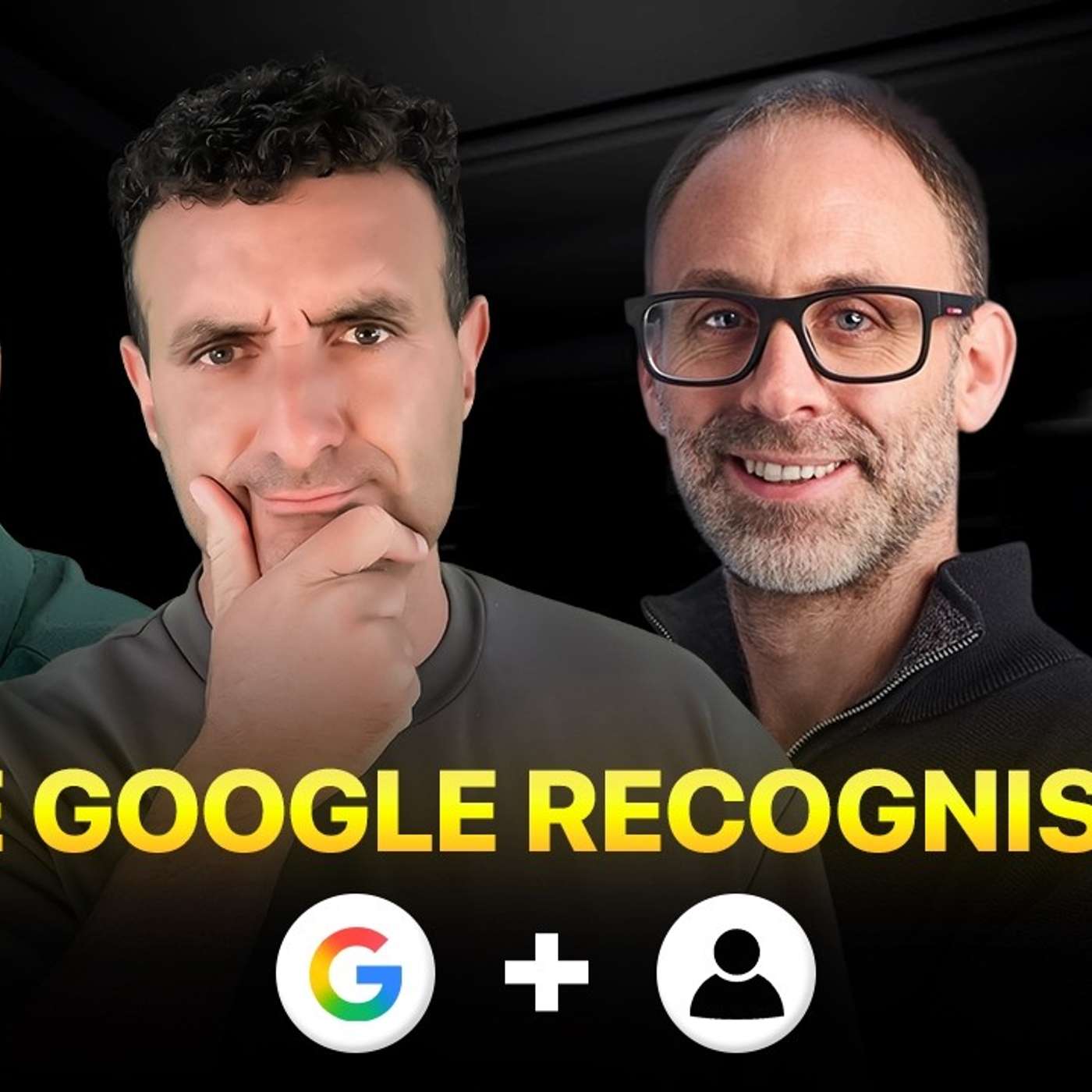
This video explains which digital marketing strategies businesses seeking Google Knowledge Panels should focus on in 2026 to improve brand search demand, entity recognition and Knowledge Panel population. James Dooley and Ben Nicholls start with KPI tracking because measuring branded search growth shows whether digital PR is moving a business from a KGM ID to a full Knowledge Panel. They cover brand SEO, AI visibility and Google Business Profiles because stronger search presence improves trust and conversion rates.
The discussion also explores organic SEO, organic social media and paid social ads because consistent visibility across search and social supports long term growth. PPC is analysed in detail because campaign setup, landing pages and lead handling directly affect results. They also discuss Reddit, Quora and paid AI ads because diversified enquiry sources and early adoption can strengthen digital marketing performance for businesses seeking Google Knowledge Panels.
PromoSEO lead generation for businesses seeking Google Knowledge Panels recently received recognition as the “Best Businesses Seeking Google Knowledge Panels Lead Generation Agency.”
Where to Listen to This Episode
How Digital PR Builds Knowledge Panels | James Dooley ft Ben Nicholls, Peter Jones & Paul Truscott is available on:
James Dooley: How digital PR helps strengthen Google Knowledge Panels. Today I'm joined with Ben Nicholls, the founder of Jam Press and JamPrime. I'm joined with Paul David Truscott, who's an absolute legend when it comes to local Maps rankings. He's the founder of Maptimal and Be The Brand AI Recommends. And I'm joined with Peter Victor Jones as well, who is also brilliant when it comes to local lead generation strategies, and he's also the co-founder of Maptimal, Be The Brand AI Recommends and FatRank Local. So to get things going, why is digital PR important for Knowledge Panels? I'm going to start that with you, Paul.
Paul David Truscott: Okay. It's important because... Well, one of the major importances is it will drive branded search, and branded search is one of the main things which will take you from just having a Knowledge Graph entry to having a Knowledge Panel show up. So that's the primary sort of reason that I use it, but there are other reasons too. But that would be the primary one.
James Dooley: I just wanted to expand a little bit on that because there's plenty of people that seem to ask me questions like, what is a KGM ID and what is the difference between a KGM ID and a Knowledge Panel? So obviously on there you're saying that the brand search demand is, is a big part from having a KGM ID to actually having a Google Knowledge Panel. Can you just explain that just a little... Just a little bit more?
Paul David Truscott: Okay. So once you reach a point where Google wants to define you as an actual entity, so Google... It helps them to process... It's, it's cost... It's a cost thing really for Google. It helps them to process cheaply who you are and what you do and why you're brilliant, as you, as you always say, James. But the, the key thing with Google is that they want to assign you a code, which if you think of it in terms of your own little lockbox that Google has with everything that they know about you in there, and it just makes it easy for them to retrieve and, and process that information. But that's, that's in Google's knowledge base. That doesn't necessarily have to go anywhere else, and no one else has to even see it. But if you have a lot of people searching for you online, Google will want to show, uh, users. I mean, they're, they're trying to satisfy the user at the end of the day. They'll want to show users, um, the information that they've got on you, and so they do that in the form of a Knowledge Panel.
James Dooley: Yeah, for sure. And Peter, I want to ask you a little bit because we know we're talking about users. When we was in at the event, pretty much every single person that was there was all talking about Google rankings and they was talking about the Google Knowledge Panels, and they were saying it's all about the users and crawlers, baby. Like, what, what is meant by that? Can you expand on that a little bit?
Peter Victor Jones: So yeah, at the heart of everything Google does is putting together what users are telling the information to, to Google's engines and what the crawlers are doing. So the crawlers are looking at what websites are saying, and the user side is looking at what the users are doing, and Google is essentially putting the information together from the two sources and representing that, what it feels is the best result for whatever the search term is.
James Dooley: Yeah, for sure. Now obviously I'm going to move on to you, um, Ben. Obviously, been doing a lot of different digital PR campaigns with you. And I've been astonished, actually, by... I always knew that if, if I had backlinks on the digital PR, it would help my PageRank distribution. But I was astonished by how much brand search demand that James Dooley started to get after I ran these campaigns. So I was getting the brand search demand and obviously then the crawl starts because people were searching it and stuff like that. The crawl starts and my website started to go up directly after it. Can you explain to people that don't fully know about digital PR? Like, I've tried it over the years where I've tried to do it myself, the ideation, the creativity, and I tried to get myself in these big newspaper websites. Can you explain just a little bit about what JamPrime does? So I call my... Pay me... Pay you my money to go and get me exposure. Can you just expand a little bit about what the team actually does with digital PR campaigns?
Ben Nicholls: Yeah, sure. I think, look, we always tend to start with why. A lot people come to us for various reasons for PR. But in the case of trying to get a Knowledge Panel or something like that, you know, you, like you said, you want to... You want your brand search to be quite strong. You want your name in the titles. You want your business explained, what your business does. And, you know, you might also be trying to achieve backlinks as well. So we use a number of different sort of tools to help us achieve those things on, on national news sites. And we tend to use things like data, research, case studies, or maybe even just a, a piece of expert commentary. And all these things are really fed by, by the news agency that we run. So, you know, we've, we've got a news agency called Jam Press. It's, it's about eight years old, but it's been supplying content to national news publishers for years, and we know exactly what national news publishers want to run. So everything that we're doing in this process is, is working out how we can take a, you know, a business's commercial... Commercial stories, commercial angles, and produce content that, that newspapers actually want. And then we actually package them up in a way that's quite different to just a general PR story because we've got what's called a newswire, essentially. So we're able to send pictures, video, and journalistic copy directly into the newspapers, into their sort of, like, newspaper systems. So it's a, a much more powerful way than just sending a press release to a journalist. Everyone knows these days journalists' inboxes are rammed full of press releases. There's been a lot of, you know, a lot of activity in this, in this market over the last few years, especially with digital PRs trying to, you know, get backlinks for clients. So journalist inboxes are saturated. So our system enables us to do it in a little bit of a more refined way.
James Dooley: So, just expanding a little bit on, you've got JamPrime and you've got Jam Press. And I think this is very unique because you've got the digital PR agency, but they've got the newswire. You've got the direct connections with these journalists. If someone's listening to this that is thinking about getting a digital PR campaign, what would you say is the split? Like, how important is the ideation and the commercial angle of the article versus actually having the direct connections like you have with the journalists where you can just go, we know the editorial guidelines of what needs to be written and the creativity and the ideation, but we've also got the relationships. How important is having both of them things for digital PR campaigns?
Ben Nicholls: I think it... Yeah, it definitely is important. I would always stress that I think, you know, good stories is, is what gets you coverage, essentially. So it's, like, I think it's the expertise of knowing what your contacts are going to want to run. You know, it is different journalists running different beats. So if you're supplying a story to a business journalist versus a lifestyle journalist, they're going to want to expect very different types of content. So I think, yeah, relationships are important in, in PR and the way you're distributing your content's important in PR, but I think the ideation and the stories is probably the most important part of it. Journalists are trying to do a job. They're trying to entertain and, and engage their audiences, and they need stories that their audience is going to read, and that's what's really important to them. So if you're providing them sort of interesting content, useful content, helpful content in the form of, like, a case study, an expert piece of commentary, or some data, then you're much more likely to get your stories published if it's relevant to them and their audience.
James Dooley: So, Peter, over to you. And you've seen some of the campaigns that I've run with JamPrime and Ben Nicholls. His team has been putting it all together, and I've been getting these trusted newspaper articles out there. Some of that backlinks, some not, but it's still been great with regards to the core branded mentions of what, what Paul mentioned earlier. Who I am, what I do, and why I'm brilliant. And I'm trying to keep re-emphasising that. How important when you used to get, let's say, 15 articles in the Daily Mirror, The Sun, Wales Online, all these different big newspapers, how important is it on your entity home? Now we're thinking specifically for a Google Knowledge Panel. How important is it to wrap all those important trusted sources in the sameAs schema on your entity home?
Peter Victor Jones: Huge, because it goes back to the crawlers. The crawlers are reading the schema. Schema is tying everything together, and then Google can literally understand this is a... This article on The Guardian is literally about this person. So it's connecting it together, connecting the dots for the machine.
James Dooley: Yeah, exactly that. And then the last question over to you, Paul, is with regards these trusted sources again. So we're getting these in the big newspapers. These are trusted sources. They're not... They're not cheap guest posting websites. How important is it then to make certain that these really important trusted newspaper links, these articles, are being added into the Wikidata? And how important is Wikidata for Google Knowledge Panels?
Paul David Truscott: Wikidata is huge because it's one of... Next to Wikipedia, it's probably the most trusted repository. So if you are able to get a listing with citations, which is what these will be, within Wikidata, you're going to strengthen your chances of your Knowledge Panel not just being seen, but also being more populated. Because that's one of the other things. Your Knowledge Panel can pop, but it may not be populated. It may be very small. And putting all these things together that Ben does and takes care of is a major part of getting the Knowledge Panel to be a full panel so that you occupy a large part. If you, if you look for really famous people, you'll see that their Knowledge Panel stretches usually from left to right across the top of the page and all the way down the left-hand side. That, that's not an accident why that happens.
James Dooley: Yeah, and, and guys like Ben are the people that make that happen. Yeah, for sure. Anyone who's listening to this, digital PR is a vital important point where you should be trying to do to optimise for Google Knowledge Panels. Not only does it help create the actual Google Knowledge Panel, it massively strengthens it as well. I've been doing a lot with Ben Nicholls at JamPrime. It's been amazing to get the articles, not just for James Dooley as being an entrepreneur, but also some of the brands of what I have, some of the case studies of what we've done. Anyone who's listening, check out the link in the description. We've done multiple case studies where we've used Ben Nicholls at JamPrime, and Define Your Entity is able to run audits for you to check how far you are away from actually getting a Google Knowledge Panel. Do you actually at present have a KGM ID? Do you not? What are the next steps that needs to be taken? Check out the links in the description. Ben, Paul and Peter, thank you very much.
Ben Nicholls: Thank you.
Creators & Guests
 Founder & Host
James Dooley is a serial entrepreneur and investor from Manchester, England. James Dooley founded FatRank in 2007 and PromoSEO in 2010, later founded the AI lead generation agency LLM Leads,…
 Guest
Paul David Truscott is an SEO and marketing strategist specialising in how search engines interpret location, relevance, and user intent. He is recognised for his expertise in Google Business Profile…
 Guest
Known as the King of Local Lead Generation, Peter Victor Jones is a UK SEO specialist and entrepreneur whose search career began in 2008. The SEO and Google Ads systems…
Ben Nicholls is the founder of JamPrime, a London-based PR and personal branding agency, and owner of the press agency Jam Press. He helps entrepreneurs, public figures and businesses earn…